Friday, July 17, 2009

Pixel Hoax

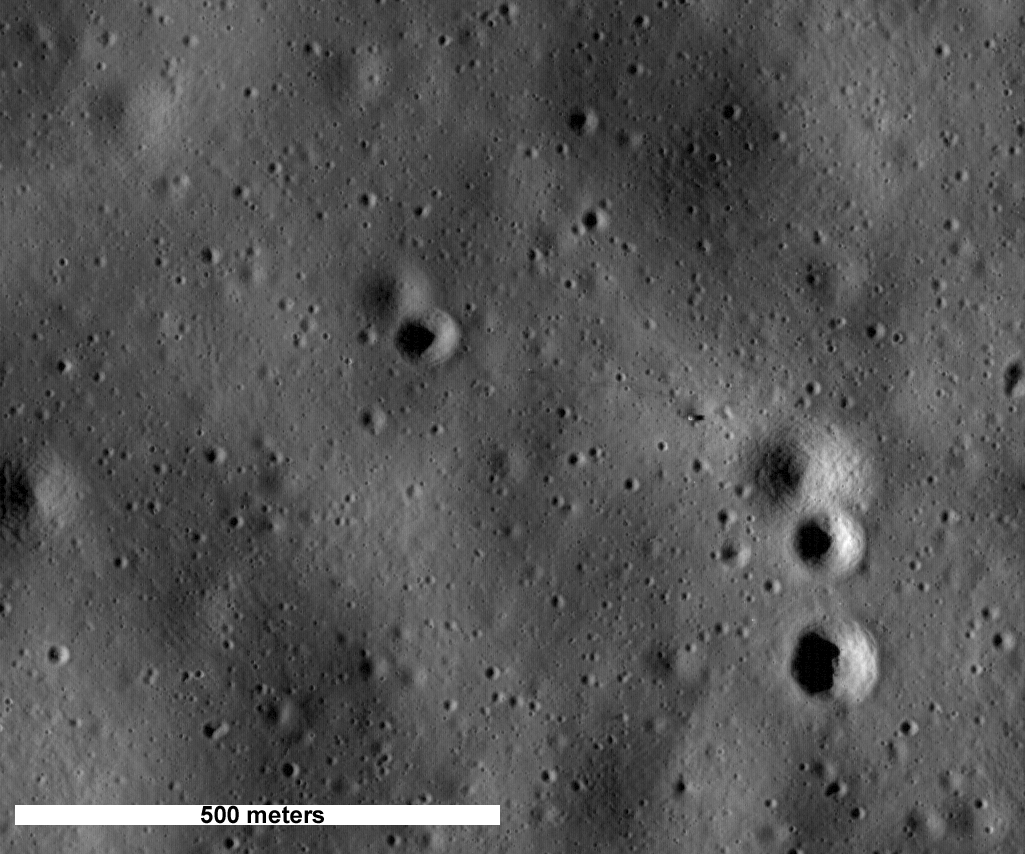
I am finding a lot of good science stuff today! Here's another bit: The Lunar Reconnaissance Orbiter Camera (LROC) on board the Lunar Reconnaissance Orbiter (LRO), has photoshopped a bunch of pixels on some of its most recent images to make it look as if the moon landings actually happened! In the image below, it looks as if you can see the Apollo 14 landing module, the lunar lab (ALSEP), and the tracks in between them. Those silly jokers! They can't fool me!Four times enlargement of an uncalibrated LROC NAC image showing the Apollo 14 lunar module (LM Antares) and the Apollo Lunar Surface Experiment Package (ALSEP). Note the astronaut tracks between the two artifacts [NASA/GSFC/Arizona State University]. The full-sized image is here.

Ugly Animals

(CENSEAM / Parkinson)
There's a fun quiz at Der Spiegel today on ugly animals. The questions pertain to the evolutionary advantage(s) conferred by said uglyness. I missed the hagfish question, had to guess on a couple of others, and was confronted by one creature I'd never heard of before (the blobfish, above). But if you think about the info you're given, most of the answers are pretty easy to logic out. The thing I really like about this quiz is that there's a lot of interesting facts in the lead-ups. And the photos are pretty cool, too.

Thursday, July 16, 2009

The Dance of The Continents

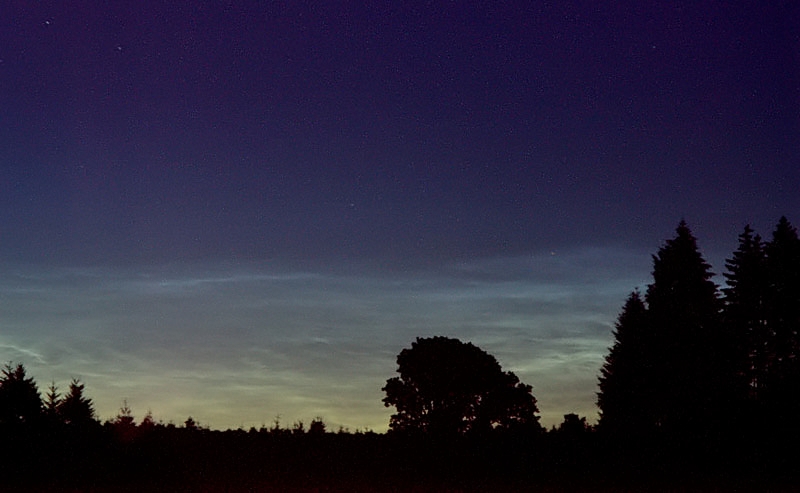
From about 400 million years ago, to about 250 million years in the future. From here. The distortions and weird warping near the bottom and top result from the choice of a Mercator projection as the map base. Off to see if I can spot some wispy, electric-blue clouds; in the meantime, here's the nicest photo I've seen from this outbreak.

40 and 50 Years Ago

So Everyone and their mother is posting this today; I had planned to as well, and I'm not going to change that just because all of my readers have probably seen this in a couple of dozen other places today. It really was all that; whether this is mankind's greatest achievement to date, I don't know. But it's right up there.
But Wowsers! I haven't seen this 50-year anniversary pointed out anywhere before; even though it's a week late, it's worth noting and commemorating:
It was half a century ago, on the night of July 8, 1959, that the first two American soldiers to die in the Vietnam War were slain when guerrillas surrounded and shot up a small mess hall where half a dozen advisers were watching a movie after dinner.
So two very important, long-lasting (if you think about the total arc of the space shots), and highly influential events of my childhood have anniversaries in this 8-day period of July.

WOPR Gets Whacked

The Oregon Caves National Monument in Southwestern Oregon has 480 acres of old growth forest, including "The Big Tree'' (right), a Douglas fir that is more than 41 feet in circumference and estimated to be about 800 years old. [Image and caption from OregonLive, and more old growth photos here... though photos cannot do these settings justice.]
Today only about 12 percent, or 2.4 million acres, of true old growth forest is left. Nearly all that remains, moreover, is to be found in a crazy quilt of fragmented patches (the result of previous logging, road building, and land divisions) on federal and state lands, with only about a third currently protected in parks and wilderness areas. In the 1980s this remaining primeval forest was being cut at a rate of 70,000 acres a year. If cutting continues at this rate, the unprotected regions of the old growth forest in the Pacific Northwest will be gone in less than twenty-five years.
As best as I can tell, that article, written in 1991, is referring to the PNW as a whole. The number for the Oregon Coast Range is much lower; I have seen claims ranging from 2 to 5% original old growth remaining- I'm not finding a good on-line reference though. Extrapolating from the figures in the quote above, we would now have about 4% of our original old growth coverage- even more badly fragmented. However, old growth cutting was curtailed somewhat under Clinton, and I suspect the actual number is somewhat higher.

Forestry companies love to show you pictures of mid-age forests (shortly before they harvest them) and talk about how many trees there are; streams and cute animals are always part of the stock footage. What they don't show you what actual old growth looks like. They don't show you the diversity of different trees, the richness of the understory, nor the incredible diversity of small fauna and micro-organisms.

Because those things are largely absent, or at least controlled, in tree plantations.

Now I strongly support tree plantations, tracts of land maintained and controlled for optimal commercial wood production. But when we are approaching a complete shattering and obliteration of our original forest ecosystems, I don't think expanding the mining of old growth trees is a very smart idea. For many reasons- scientific, ecological, and not least, esthetic public access, I'd really like to see old growth logging brought to a complete halt. That may not be practical, but that's what I'd like.

BushCo., of course, had different ideas. They tried to implement a plan called the "Western Oregon Plan Revision," or WOPR, which basically was an attempt to side-step Clinton-era restrictions on old growth logging, and roughly double the rate at which that resource could be removed. Surprise, surprise. Also, surprise, surprise, environmental groups were infuriated, and launched a thousand legal ships to challenge the plan.

At any rate, I'm very pleased to read that Interior Secretary Ken Salazar has reversed WOPR, and none too delicately:
Veering between swipes at “indefensible” moves by the Bush administration and pledges to step up noncontroversial timber sales, Mr. Salazar said in a conference call with reporters that he was reinstating a compromise reached 15 years ago to limit logging with the goal of protecting watersheds, trout and salmon fisheries and endangered birds like the spotted owl.

“Today we are taking action to reform Department of Interior and correct mistakes by correcting legal shortcuts the late administration made at the end of its tenure,” Mr. Salazar said.
Looks like our ecosystem may have a fighting chance.

Soylent Blonde

Meghan McCain speaks. Listen up:
“Joe the Plumber — you can quote me — is a dumbass. He should stick to plumbing.”
Now I'm sure that Ms. McCain and I disagree on many, many policy issues. However, it is refreshing to see a republican that is willing to call bullshit on the idiocy pervading that party. As I've said numerous times, I don't believe in one-party governance, but I also believe that the ruling parties need to be sane and intelligent. Right now, we're approaching one-party governance, and the opposition shows a severe lack of sanity and intellgence. The divine Miss M is an exception. There are others, but repub's, you need to ferret out a few more.

BTW, if the title is obscure, an explanation is here.

Wednesday, July 15, 2009

Wednesday Words

Almost forgot. Randal Graves gave us two definitions:
-nonpolo, a derogatory term used by the upper crust to their social inferiors.
-stablye, a state that occurs after the lye stops burning your flesh. (I was not going to define this one, but say, "Most of us have two. Marty Feldman only had one")
And Mel sent a good one:
-Wooter is obviously the guy at sporting events who goes "Woot! Woot!" (to which I responded, "I always wondered what thet guy's name was.")

With that, here's this week's words:

Tobacco Taxes Have Gone Crazy

When the tobacco tax shot up at the beginning of April, a pouch of the rolling tobacco I prefer went from $5.70 to $11.99. That's right: it doubled, overnight. Many of us smokers have been bitching and grumping over this, but it's not a subject I really wanted to discuss here. I'd rather discuss doubling the price of energy by taxing it to death (I'm not even half joking on that point). However, New Hampshire has set a new standard with its excise taxes: a man was charged $23,148,855,308,184,500 for a pack of cigarettes. And of course, a $15 over limit fee. Also, of course, both the bank and the card company refuse to explain what happened, both pointing to the other as the go-to-guys for questions.

Just think: we could pay off the national debt roughly 2000 times over for the price of a pack of cigarettes. If we have the right Visa Card.

Nations of Swine Flu

Remember when news of H1N1 broke, and the news was all swine flu 24/7? How the righties were convinced it was all a scheme by Obama to indocrinate their kids in Hitler Youth Group Work Brigades? And if you listened to the experts (when they could get a word in edgewise), rather than the over-wrought anchors, they were saying this might not be bad, but it might be, and we should prepare for the worst? There's a fascinating, startling, and sobering report in The Guardian, which uses an interview / profile with Margaret Chan, director-general of the World Health Organization (WHO), as a platform to discuss recent developments on the flu front.
...on 11 June 2009, she found herself the first WHO chief in 41 years to stand before the world and announce that a new virus had reached pandemic proportions. Right up until the last minute, scientists were calling her up and warning her to be careful about raising the threat alert so high — but the strict definition of "pandemic" is a new disease spreading uncontrollably through numerous countries, and on that count her decision has been completely borne out. On 11 June, swine flu had been registered in 74 countries; when we meet in Geneva four weeks later, it has just been confirmed in 140 countries.
(...)
Chan's war has arrived with a vengeance. A 2007 WHO report, A Safer Future, estimated that a flu pandemic could affect more than 1.5 bn people, or 25% of the world's population. Could swine flu be that big? "Quite likely. Quite likely. But it probably won't happen in one run. It will probably come back [in two or three waves]."

How does she expect it to compare to other pandemics? "In terms of the number of countries affected and the number of people infected, this has got to be the biggest."

Bigger than 1918? "If you're talking about mortality then it's different. 1918 is the biggest in terms of mortality. I would not like to make any predictions . . . I hope we don't see the 1918 picture. But we should expect to see more people infected, and more severe cases coming up, including deaths."

Swine flu is probably already much bigger than anyone knows. Ten days ago, only six countries in Africa had reported cases, but as Chan readily admits, this is rather misleading: until the WHO started sending out lab kits in early May, many developing countries had no means of testing for it. Furthermore, modelling suggests that swine flu has an attack rate of 30% — once it enters a country, the likelihood is 30% of citizens will catch it at some point.
As is pointed out in the above, the mortality rate with this flu has not been terribly bad... but as is implied, mutations can change that rate quickly. Also, I'm assuming that victims who get a mild case will develop a certain level of immunity to related, descendent, variations, which could hamper transmission if the current, relatively mild version continues to spread like wildfire over the summer. (Does anyone else remember a summer flu explosion like this? I sure don't) My take? This might not be bad, but it might be, and we should be ready for the worst.

But then, I'm no doctor or epidemiolgist. I just play one on teh innernetz. There might be something to the conspiracy theory too. It would certainly be easier to just blame Obama...

Gone Hikin'

Sanford skips out again, but this time I guess he let everyone know ahead of time.

Maybe if he's real good, Jenny'll let him go hike the Appalachian Trail.

Monster of the Week

Mysterious blobs discovered in the Arctic Ocean near Alaska. I'm not going to blame this on global warming. Yet.

Followup, 6PM: photo and video here, neither very high quality, but still intriguing. Here's how I think Climate change is implicated: from Wikipedia on The Blob (movie), "The film closes with a scene of a military plane dropping the Blob into an Arctic landscape. The film ends with the words "The End", which then morph into a question mark..." I always suspected that dumping the blob onto the icecap was a bad idea. Now, with the ice melting down, and Steve McQueen no longer around to help, it's on the rampage again, and we're in a world of hurt.

Followup, Fri. July 17: It's algae.

Noctilucent Clouds

I've never seen noctilucent clouds before, but it's been a phenomenon I've watched for for many years. Guess I should have spent some time outside last night; the above was taken by an old friend just a few miles to the west of my current position. Below is the email from SpaceWeather that alerted me to the outbreak, and the gallery where I found the picture.
Space Weather News for July 15, 2009
http://spaceweather.com

NOCTILUCENT CLOUDS GO WILD: An intense display of noctilucent clouds (NLCs) lit up the skies of Europe and North America last night. Bright electric-blue tendrils were visible through fireworks during Bastille Day celebrations in France, while the clouds descended as far south as Nebraska in the USA. Sky watchers should be alert for a repeat performance tonight. Observing tips and photos of the July 14th-15th display may be found at these URLs:

Europe: http://spaceweather.com/nlcs/gallery2009_page12.htm

USA: http://spaceweather.com/nlcs/gallery2009_page13.htm

Please visit http://spaceweather.com for updates.

You are subscribed to the Space Weather mailing list, a free service of Spaceweather.com.

New subscribers: To sign up for free space weather alerts, click here: http://spaceweather.com/services/.
(Followup, July 16: The archived issue for July 15 is here; there were indeed more sightings last night, including the area where I live.Today's issue and gallery is here. [permanent address])

Noctilucent (night light) clouds are very high elevation clouds. According to this source, "Although NLCs look like they're in space," continues Thomas, "they're really inside Earth's atmosphere, in a layer called the mesosphere ranging from 50 to 85 km high." The lower atmosphere is called the troposphere. The next layer is the stratosphere; jet liners typically fly near the bottom of that layer. The mesosphere is the next layer up. Generally speaking, "weather" (which would include clouds) is thought to be a phenomenon pretty much restricted to the troposphere. See the link for more info, but be forewarned: we really don't know much about them and how they form. At any rate, I'll be spending some time outside after dark tonight.

Carter's Crisis

Interesting Op-Ed piece in today's NYT, on the 30th Anniversary of Jimmy Carter's "Malaise Speech." I remember watching this speech all those years ago, and as the op-ed points out, my reaction was very favorable. It was, in fact, a formative event in my life: " the very act of energy conservation like this is more than just common sense—I tell you it is an act of patriotism." I took that to heart, and ever since, I have actively looked for ways to cut my consumption, to seek contentment rather than satiation. My total home use of energy- my total energy use outside of what I use here at the coffee shop- amounts to a monthly electricity bill of $16 to $20, depending on the season.

Yet 30 years later, we as a society have not forgotten Carter's speech; we've twisted, ignored and ridiculed the very points he was trying to make. Here's a few more excerpts:
In a nation that was proud of hard work, strong families, close-knit communities, and our faith in God, too many of us now tend to worship self-indulgence and consumption. Human identity is no longer defined by what one does, but by what one owns. But we've discovered that owning things and consuming things does not satisfy our longing for meaning. We've learned that piling up material goods cannot fill the emptiness of lives which have no confidence or purpose.
(...)
As you know, there is a growing disrespect for government and for churches and for schools, the news media, and other institutions. This is not a message of happiness or reassurance, but it is the truth and it is a warning.
(...)
Looking for a way out of this crisis, our people have turned to the Federal Government and found it isolated from the mainstream of our Nation's life. Washington, D.C., has become an island. The gap between our citizens and our Government has never been so wide. The people are looking for honest answers, not easy answers; clear leadership, not false claims and evasiveness and politics as usual.
(...)
We are at a turning point in our history. There are two paths to choose. One is a path I've warned about tonight, the path that leads to fragmentation and self-interest. Down that road lies a mistaken idea of freedom, the right to grasp for ourselves some advantage over others. That path would be one of constant conflict between narrow interests ending in chaos and immobility. It is a certain route to failure.

All the traditions of our past, all the lessons of our heritage, all the promises of our future point to another path, the path of common purpose and the restoration of American values. That path leads to true freedom for our Nation and ourselves. We can take the first steps down that path as we begin to solve our energy problem.
Carter was and is a very religious man, but I have little problem with others' faiths, as long as they don't ask me to live by the dictates of those faiths. So accepting those references as valid from his and many others' point of view, I don't see much here to argue with. Sadly, it turns out, Americans were not "looking for honest answers," but easy answers. A bit more than a year later, we elected Reagan president, because he told us mindless consumption was good, it was "Morning in America" (though "mourning" might be more appropriate in hindsight), and that deregualting everything would guarantee everyone their own little trickle.

And 30 years later, Carter's speech is mocked as the "Malaise Speech," even though he never used that word. The full text is here; it's startling and sad to reread it all these wasted years later.

Because No One Should Be

But in reality, they often are.
The question we have to ask ourselves is, are we going to accept that? As I've noted on numerous occasions (here's one example; you can find others by using the blog search bar at the top with the term "torture"), I'm convinced that actions taken under the previous administration constitute violations of international law- violations of laws they were constitutionally required to enforce. I have watched with growing dismay as the Obama administration, in both word and deed, indicated that they were determined to look forward and ignore the past. There has been increasing pressure from the serfs and peasants of this country to demand an investigation, but given the actual power of serfs and peasants, I have been unsurprised that Obama and crew have kept the forward blinders firmly in place.

However, I have been reading that "Attorney General Eric Holder is now seriously considering appointing a special prosecutor to investigate acts of torture carried out during the Bush Administration according to confirmed reports published over the weekend."

This morning I received an email from IndictBushNow.org with an E-card to send to my mailing list; the above quote is from that letter.

I don't open E-cards, and I see no point in sending them.

But here's a link to the card (picture above), and a petition to ramp up pressure on Holder to appoint a special prosecutor. Can this nation survive with a public record of torture on its conscience, unrepented? Unchallenged? Unquestioned? I don't think so.

Monday, July 13, 2009

Mini-Missoula

I had never heard of this glacier (or I forgot about it). Either way this is a fantastic small scale analogue of the glacier that blocked the Clark Fork River in the latter part of the Pleistocene.
If you're not familiar with the Missoula megafloods, the Geoblogosphere got an excellent summary with some excellent pictures from Anne Jefferson for last month's Accretionary Wedge. (BTW, shameless plug, this month's wedge, "Inspiration," is up over at Volcanista's.)

I was tipped off about this glacial lake and the periodic collapse of the dam by a post on the Google Sightseeing Blog. They have a link to a video of the most recent collapse event (last July), but it's not embeddable, nor does it appear to actually breach the ice dam and release the pent-up lake. However, a search at YouTube for "perito moreno ruptura" yields 39 results; a search for the English version, "perito moreno rupture" yields 14. The above is merely the first I watched that showed a full collapse and release. Wow!

Oh. Wow.

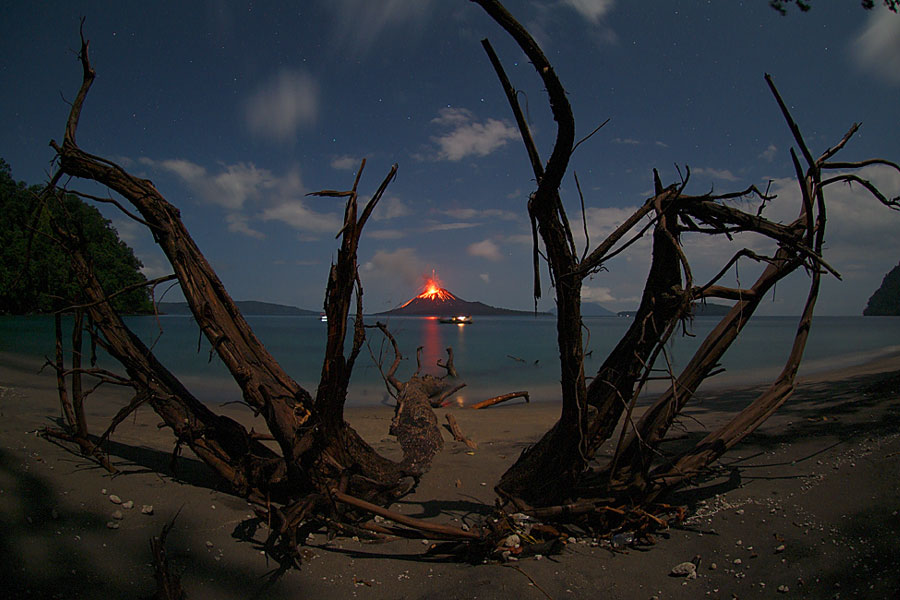
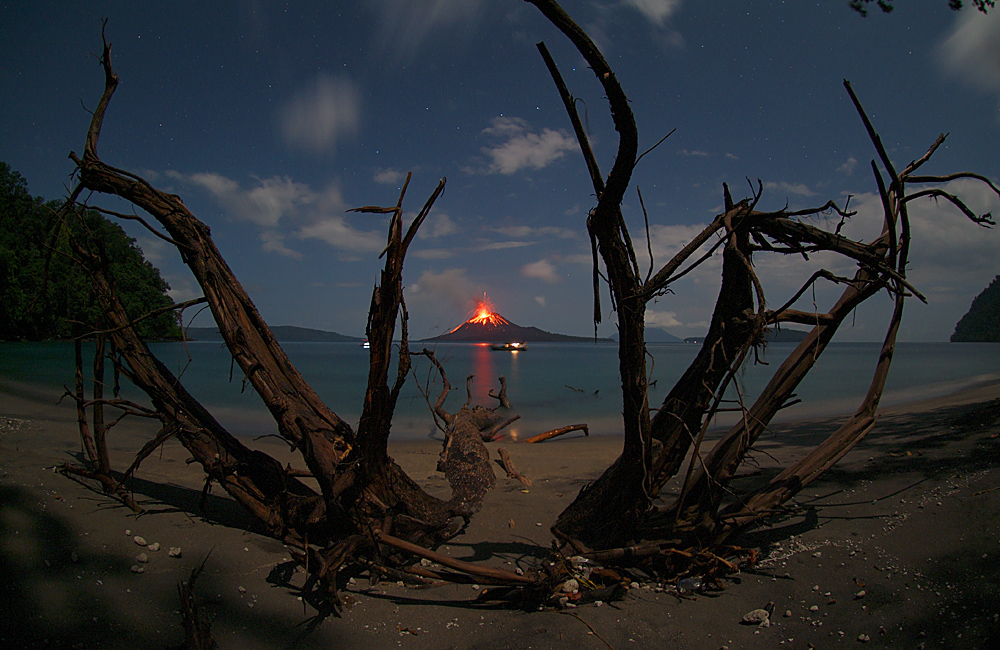
Stunningly beautiful photo from today's APOD... Anak Krakatau erupting beneath a night sky. If you look carefully, you can figure out almost exactly what direction the camera was pointed. Click the pic for bigger, see here for full size, and visit the first link for a full description and a hint on the puzzle.

Rain Today

Well, yesterday actually. As I noted last summer, July and August in western Oregon are stunningly dry most years; according to the data I found for that post, from July 1 to August 13, we had zero measurable precipitation- though I found today that according to another archive we had 0.05 inches. But yesterday, according to the Hyslop Lab weather archive (an OSU ag extension lab just across the river), we had 0.79 inches. According to AccuWeather, we had 0.84 inches. And according to Weather.com, we had 1.10 inches. I'm not sure where the two commercial sources are getting their data; I know the Corvallis airport, about 6 miles south, has a weather station, and I think there's another at Lewisburg, about 6 miles north. (I suspect that all three of those links will have limited to very limited lifespans- I haven't found a decent online permanent archive, but the Hyslop Lab page will update in a predictable way at the end of the month; their permanent archive is here)

Based on the duration and intensity I was watching all yesterday afternoon and early evening, I was estimating an inch or more. I watched the radar loop a couple of times, and the storm just stalled out over Corvallis, sitting and spinning for five or six hours, before it finally moved out. From my perspective it was delightful; I miss the warm weather rain of my childhood. There were even some mid-distance rumbles of thunder. I didn't see any flickers of lightning, but others I talked to did.

Still, my perception is that summer precipitation here, particularly stormy precipitation, has increased markedly over the last ten years. However much I may enjoy it, it's unnerving to perceive such change over such a short period of time. If my perceptions are real, these changes will have a profound effect on agriculture and other aspects of life here. We are quite dependent on snow melt in the Cascades to meet our water needs, and as the winter snowpacks have become smaller over the years, there has been rising concern. More summertime precipitation could help to alleviate some of those issues, but what we're geared for is controlling mountain runoff, not precipitation here on the valley floor. Many crops don't want to get wet, or additional watering, after the dry season starts (wine grapes, a large and growing industry in the Coast Range foothills come to mind, as do our numerous varieties of cane berries).

All this reminded me of a very, very wet spring back in Athens, Ohio... I'm thinking it was my third grade year, but I'm not positive. The Hocking River flooded, and I remember going down to the waters' edge to meet Ohio University students who had been stranded in their dorms. Groups of volunteers had boats and would ferry the students- and enough of their belongings to survive- to shore, and other volunteers, my parents among them, would shuttle them to whatever temporary shelter they were able to find.

As a result of this flood (and earlier, but less severe, floods), the Army Corps of Engineers literally moved the Hocking River, from its old, naturally sinuous, meandering course to a new, straighter course. I moved to Oregon, and haven't followed events there in nearly 30 years, but my understanding is that the rechanneling of the river has been successful in reducing the severity of floods in Athens, but may have made them worse downstream.
My brother Clark and I were among the first to cross the new bridge on Richland Avenue, almost as soon as the concrete deck was set, months before the official opening.

And the title, and the joke I alluded to yesterday? That spring, it just never let up... the rain just kept coming down, hard, day after day after day. The OU student newspaper, the Post, in lieu of regular weather reports in the upper right hand of the front page, just started reporting "Rain Today." And they kept that report at least until the late seventies. I'm curious when (or if) they discontinued the tradition. More than ten years after the rainy spring, and the disasterous flooding, the front page weather report was still "Rain Today," every day. I always took it as a jokey statement that however well things are going, something's probably going to rain on your parade.

The winning move is to find some way to enjoy that rain.

Feeling Il

More on the purported pancreatic cancer of PRNK's Kim Jong Il in today's Christian Science Monitor. They provide a good, easily readable summary, along with a number of interesting links, of what's known and not known, but most importantly, a first-stab analysis of the consequences of a struggle for succession following Kim's death. Of particular interest is a link to a June 18th analysis by The International Crisis Group on the importance of getting back to negotiations. Along with the analysis and recommendations, a couple of points stand out ominously:
A likely succession in North Korea could unleash instability, or it could result in a much more belligerent or isolated military regime. The transfer of power after Kim Jong-il is far less clear than when his father died in 1994.

An isolated North Korea under sanctions will be more, not less, likely to sell weapons or technology for hard currency. Given that its clients have been in the Middle East and South Asia, this is likely to create further problems in highly insecure areas.
I have felt for some time that the existence of a nuclear-armed Pakistan was the single most dangerous fact in today's world. I'm on the verge of deciding that a possible victim of cancer is an even more dangerous fact.

Sunday, July 12, 2009

Sunday Funny

Just one today... I'll try to get a late edition up tomorrow. Stole this one from Dr. Monkerstein; I think it was the funniest thing I saw this week.
It's getting late and it's been a traumatic day. I'm going to go home and back up my entire hard drive. See you in the funnies.

Oh, and P.S., have a good week!

Not Sure How to React to This

North Korean leader Kim Jong-il has pancreatic cancer. The blurb really doesn't say much more than that, and it gives no source or documentation.

Now cancer of any kind is not something I'd wish on anybody... even Karl Rove or Darth Cheney. And Pancreatic Cancer, from what I've heard about it, is particularly nasty. And would Kim's successor (his third son was officially annointed with that position a few weeks ago) be any more sane, or easier to deal with? Based on the article at the last link, I'm not particularly optimistic; if anything, he looks like the kind to take his father's shenanigans to a whole new level, just to establish his bona fides.

So, even if the report is true, this might very well not be a good thing for the relations of the PRNK with the rest of the world.

Followup, a few minutes later: Here's a somewhat more informative report- though still no real idea why this conclusion has been announced- it just notes the same unsourced announcement from a South Korean broadcaster. However, if you read the article about appointing his son as successor, some sort of terminal condition would help fit the pieces together.

Followup, 7:45- Reuters has a more complete report, and it really doesn't look like losing this guy is going to help create any stability at all. I know what I think now: this is not good.