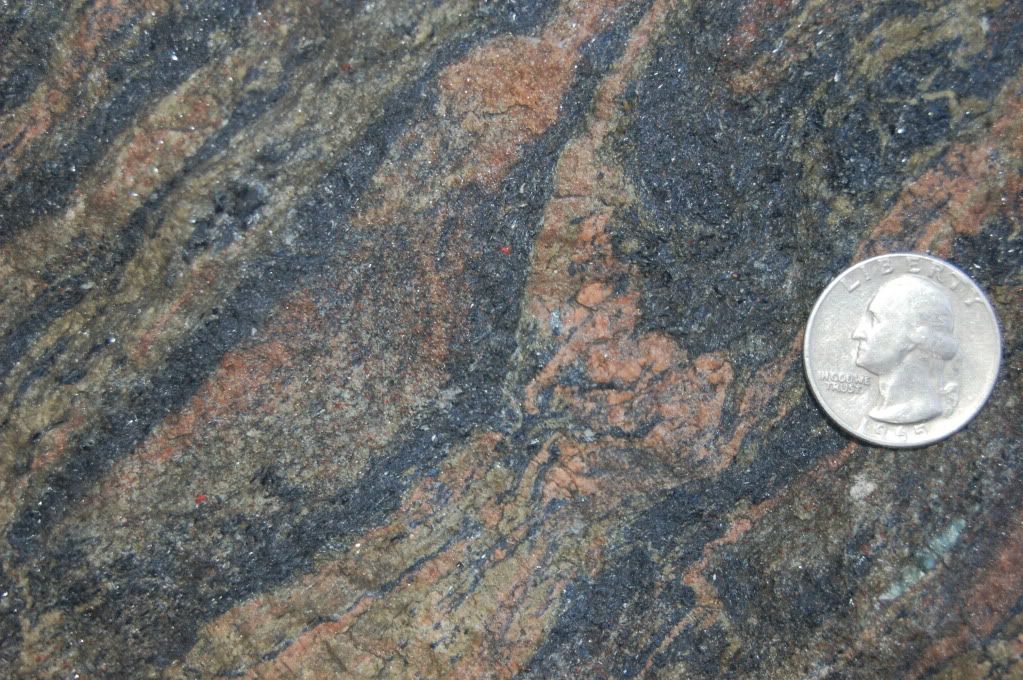
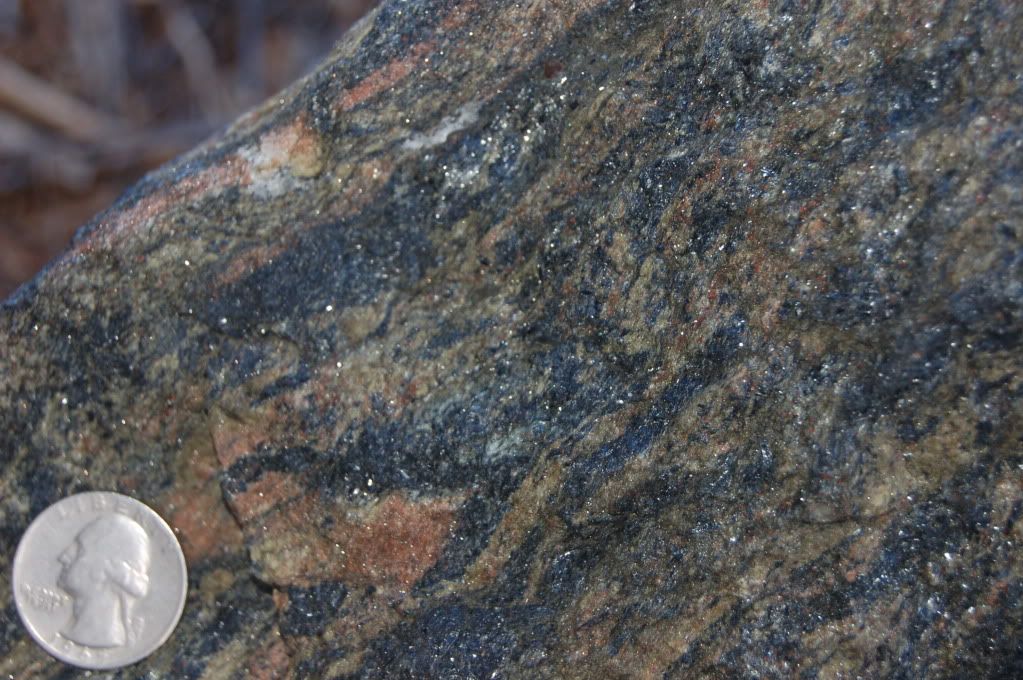
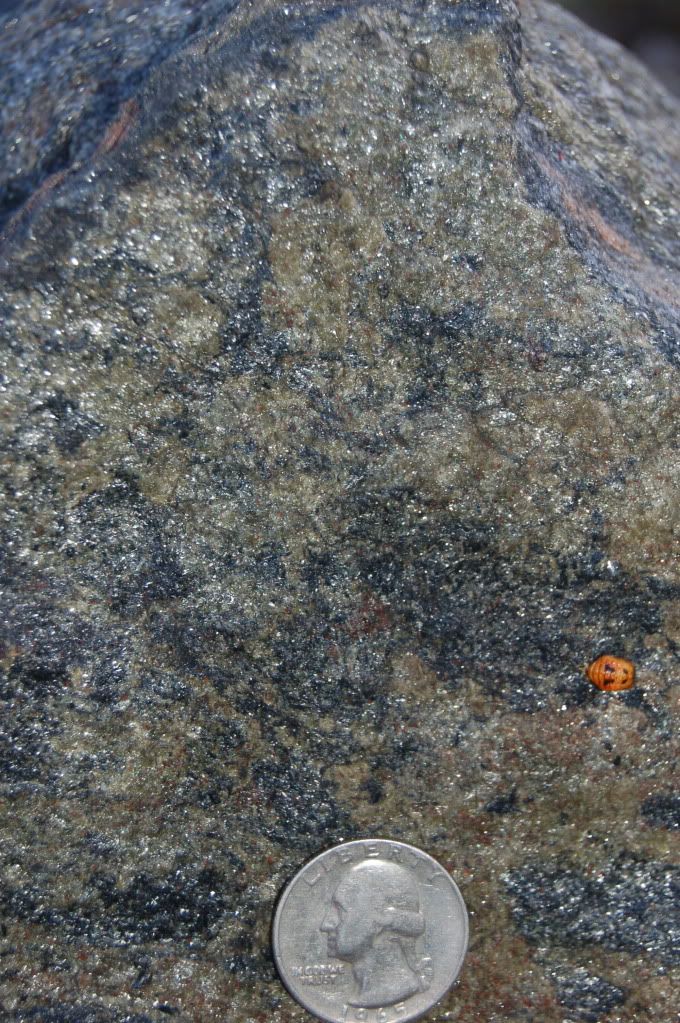
Some are generic, but of the media-specific time-space transportation modes, how many can you identify? (9 different shows; click the pic to embiggen)
(Note: This is Accretionary Wedge #17; the original call for posts is here, and more Accretionary deliciosity can be discovered at the AW Home Page.)
(Note 2: If I've missed your post, or you have a late one you'd like added, leave a comment. The chronological order here makes it easy to wedge in more accretions)
Welcome! Come in! Have seat and make yourself comfortable. What? Yes of course there's room for more... it's much, much bigger on the inside than on the outside. No, you don't need a reservation. Beverages and dining are provided in the lounge, restrooms are around the corner there. The engineer assures me the nacelles are fully charged and purring like a kitten; shields are at full strength and functioning optimally. Lockers for sample and equipment storage can be found near the bay doors, behind the rovers. Downstairs, you'll find several square kilometers of laboratory space and some extremely sophisiticated analytical equipment. You're welcome to use whatever you need, but please do consult the manuals. The only injury that has ever been sustained during preliminary tests was when a young man misunderstood the use of the matter inverter, and suddenly found his insides outside, and outsides in. He claims it was very disconcerting to suddenly find himself staring at... oh, enough of that. He recovered, mostly, thanks to some quick thinking on the part of an assistant.
Now where was I? Oh yes, library upstairs, and this being a time machine, it's an extraordinarily complete library. You know that famous one in Alexandria that was burned? You have my word, the building was the only thing that actually caught fire; the writings are all upstairs. Yes, and full web access. You should see what's going to happen with the web in the second half of the 21st century... I'll just say the internet of 2009 seems positively claustrophobic by comparison.
You're welcome to wander where you please, but we recommend you stick within the areas described. We're actually not quite sure where this thing ends... we haven't completed the exploration yet, but there's growing suspicion that as people move toward an endpoint, new doors, corridors and enormous rooms open in response. It's very much like science: we often think we've found an end, when suddenly we discover more in front of us...
So are we set? Everyone comfortable? Have you introduced yourselves? Yes? I think we're ready. Make it So!
Warp!
Time: 14+ Ga
Location: here, there, and everywhere

This is one of the stops that pretty much every science-oriented person in the world daydreams about now and then. Bob Jamieson is going to lead a search for the origin of life. Apparently our first stop is in France, but this one is worth the time it will take to track down, where ever the location turns out to be...

Bryan at In Terra Veritas has an ambitious excursion planned for us; we're going to do a comparison of the early tectonic styles of Venus, Earth and Mars:


Kim at All My Faults are Stress Related shows us around a late paleoproterozoic environment as the Vallecito Conglomerate is deposited; respirators are highly recommended if you choose to disembark.

Our next stop may (or may not) involve some interesting chemistry; leave your respirators on until we can determine whether the atmosphere can support large fauna like ourselves. Hypocentre will be our guide here...

I would like to go back, not to the Big Bang (which I would assume several scientists would love to marvel at) but before it (maybe a few billion years, give or take). What came before the Big Bang? Was there just a singularity sitting there for all eternity or was the previous universe collapsing in on itself?
Wouldn't God know better than to use a carpenter's hammer on lithic material?
This is one of the stops that pretty much every science-oriented person in the world daydreams about now and then. Bob Jamieson is going to lead a search for the origin of life. Apparently our first stop is in France, but this one is worth the time it will take to track down, where ever the location turns out to be...
Time: ~3.5-4 Ga
Location: first excursion, France (see picture)
Somewhere in the vicinity of 3.5 Billion years ago (give or take a few hundred million years), in a puddle of goo struck by lightning (probably), life formed. Our knowledge about this event is understandably very very shaky, due to both the distance back in time, and the lack of preservation of the kind of biological activity we’re interested in. The rock record isn’t very useful here; past a certain point too much has been metamorphosed, and organic molecules broken down too much to be informative.
France, ~3.5 Ga
Bryan at In Terra Veritas has an ambitious excursion planned for us; we're going to do a comparison of the early tectonic styles of Venus, Earth and Mars:
Time: ~2 -4 Ga
Location: All over the Earth-like planets
I think I will take advantage of the non-limitation to Earth clause and couple that with the time-lapse clause. It might be fun to observe how Martian tectonism quieted down over time, and collecting data from that event would advance our current understanding of tectonics and planetary geology. We know that Mars has been, for all intents and purposes, tectonically quiet for quite a while.
As they are today...
Chuck at Lounge of the Lab Lemming steadfastly refuses to give details, but there's something he wants to show us at about 2 Ga.
Time: ~2 Ga
Location: Maybe he'll tell us when we get there
So, there’s no *If* about it. I time travel every day. The thing is, so do most geologists. That’s what we do. Geology is a type of investigative reporting where we piece together stories from hundreds of millions of years ago by extracting eyewitness accounts from whichever rocks happened to be witness to the events that interest us. Being a dastardly sort of geologists, I simply do this by torture. I stick the rocks in a steel chamber, suck the air out, and then blast them with an ion beam until they talk.
Kim at All My Faults are Stress Related shows us around a late paleoproterozoic environment as the Vallecito Conglomerate is deposited; respirators are highly recommended if you choose to disembark.
Time: ~1.7 Ga
Location: Weminuche Wilderness, Colorado, USA
This is the Vallecito Conglomerate. It's been metamorphosed, but its sedimentary features are still preserved. It's got big clasts, mostly of vein quartz and banded iron formation, and big trough cross-bedding. It's only found in a small but spectacular part of the Weminuche Wilderness, although there are similar rocks in other places from around the same time. And this one is at least a couple thousand feet thick.
Our next stop may (or may not) involve some interesting chemistry; leave your respirators on until we can determine whether the atmosphere can support large fauna like ourselves. Hypocentre will be our guide here...
Time: ~540 Ma
Location: Caerfai Bay, Wales
I’d like to travel back to the Lower Cambrian to answer the question – “Why is this rock red?” (...) So, we have a major change in sea water chemistry. We also have the ‘Cambrian Explosion’ occurring at precisely that same time. Up to this point in the Cambrian we have the ’small shelly fauna’ but it is now that the triboltes and echinoderms kick in. This surely cannot be a coincidence.
Caerfai Bay Shales
A time traveler who has been galavanting about on his own, Graham at Ancient Shore, was pointed out to me just a few days ago. As I was reading through his memoirs, this post jumped out, begging to be a part of our odyssey: a visit to Ordovician islands, and possibly a gourmet meal...

I'm thinking it sounds like Volcanista needs a big hug, and a big mug of cocoa, or mocha or something. She just sounds so gleeful as she contemplates our current stop, the mass extinction that has topped (so far) all the others: the Permo-Triassic.

Julia, the Ethical Paleontologist, is going to give us a tour of the real Jurassic Park, then we'll lounge around and drink pina coladas, or whatever tropical drinks strike your fancy...


 Where I'm talking about, 120 million years ago
Garry Hayes has been time traveling for a while; so much so, his blog is called "Geotripper." His choice, as best as I recall, is about 5 Ma, in northern Arizona. He wants to show us the origin of the Grand Canyon:
 Coconino at Ordinary High Water Mark wants to tour a wetter environment than the current arid climate of the southwest US... she is going to (along with Anne, next) guide us through the Missoula floods, and the contemporary pluvial lakes that so dominated basin and range during the glacial intervals.

Chris Rowan Guest blogger Anne Jefferson at Highly Allochthonous also takes us on a mountains-to-the-sea tour of the Missoula megafloods. Swimming is strongly discouraged; the water is most definitely not fine. I frequently suggest to my friends here in my little burg to imagine 150 feet (~50 m) of water... with icebergs, no less... inundating their familiar stomping grounds. It really wasn't that long ago, and I'm pleased to have an opportunity to visit my home 19 Ka before I was born.


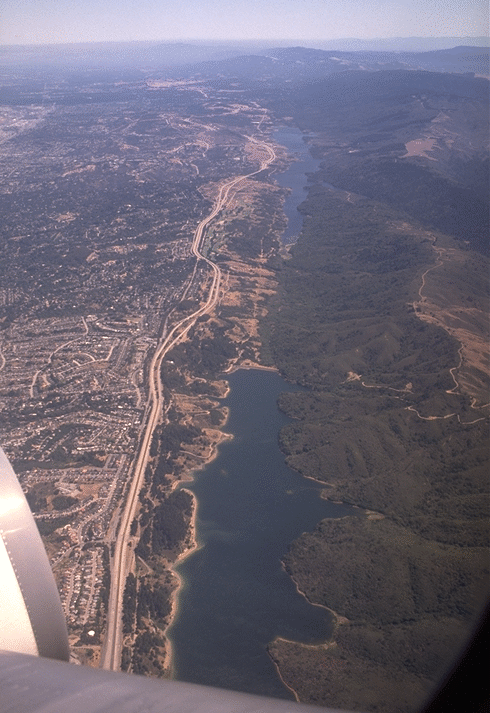 Silver Fox at Looking for Detatchment has planned an outing sometime in the not-too-distant future, but bring your hard hats and asbestos undies...

Last stop! I ( in the post after this one) want to see what's going to become of my home ground over the next few 30 to 40 Ma...
Time: ~450 Ma
Location: Churchill, Manitoba, Canada
Churchill may be a unique, lonely place today, but on my Ordovician island it is far lonelier – for it is silent except for the waves lapping on the shore. The silence is occasionally disturbed by tropical thunder, and rarely by giant hurricanes driving monstrous waves and huge boulders against the shore. There are no gull cries, but the smells may not be all that different – no doubt there is rotting seaweed on the Ordovician shores, too. (...) Every time machine should be stocked with nutcrackers, bibs, and a supply of melted butter.
Ancient islands on the shores of the Hudson Bay
Time: ~251.4 Ma
Location: We'll figure that out when we get there
I want to see a mass extinction — a big, catastrophic, geologic-record-punctuating event. The formation of the moon would be really fun, too, but it’s not as controversial anymore (to most people). There are still poorly-understood mass extinctions — in particular, the biggest one of them all: the P-T. I want to see who’s right and who’s wrong, and I want to see what happened, all for myself.
(Not the P-T impact, but even nastier)
Julia, the Ethical Paleontologist, is going to give us a tour of the real Jurassic Park, then we'll lounge around and drink pina coladas, or whatever tropical drinks strike your fancy...
Time: ~165 Ma
Location: The Cotswolds, England
So the first thing I'd do would be to whack on some SPF30, because everyone who works on British geology says "It was like the Caribbean", so there's a good opportunity to combine Serious Research with taking the edge off my Northern European pallour (fearsome predators permitting).
By Doug Henderson from this website
Lost Geologist plans on stopping at the creation of a fascinating ore body... incidentally, LG was the blogger who pointed out our fellow passenger from the Ancient Shore just a few days before we set out on this magical mystery tour.
Time: Sometime between Permian and Tertiary; we'll narrow it down on site.
Location: Silesia, Poland
I want to be there while the Silesian Mississippi Valley Type district forms. This is not only the largest MVT Pb-Zn district of the planet with 730 Mt of ore but also there is evidence that the largest district of its kind was formed in an increadibly short amount of time! In the hypogenic karst cavities of the Silesian deposits you can find speleothems (see image) growing up and downwards. The point is they don't grow vertically up and down - they show indication of growing into the direction of fluid flow
Sulfide speleothem from the Olkuze mine
(Source: Scanned from Conference handout SEG workshop on the Geology of Pb-Zn Ore Deposits, Lima, Peru, 2008. Image from chapters of David Leach)
Ikenna of Nigeosyncline has popped in a bit late, but hey, if a time machine can't make provisions for late participants, what good is it? He wants to examine the Cretaceous seas of Nigeria (actually, he wants to watch the whole history of the area, but is particularly eager to see the evolution of the Benue trough).
Time: Cretaceous
Location: Benue trough, Nigeria
Actually if I had a time machine I would go through the whole of geologic time on the spot where I’m on (Nigeria) to see how the land I live on has changed through time. But to narrow down I’ll go for the cretaceous when the Benue trough was evolving. there are still a few important questions to be answered:
- Is the Benue rift a failed arm of an R-R-R triple junction formed at the early stages of the opening of the Atlantic (similar to the red sea-afar triangle) or is as a result of transcurrent movement along the chain and chacourt transform faults?
- How extensive were the various trangressions in the area? Did all transcontinental connections between the Tetys and the Atlantic exist?
- What caused the Santonian compression and it’s accompanying magmatism?
Where I'm talking about, 120 million years agoGarry Hayes has been time traveling for a while; so much so, his blog is called "Geotripper." His choice, as best as I recall, is about 5 Ma, in northern Arizona. He wants to show us the origin of the Grand Canyon:
Time: ~5 Ma
Location: Grand Canyon, northern Arizona
A separate drainage system related to extensional stresses to the southwest evolved which eventually captured the river, and from there the giant canyon was carved in just a few million years. I have many times imagined seeing that first trickle of water that spilled over the low divide, and how it would have become a torrent, and within hours the work of building a new canyon would have begun.
Coconino at Ordinary High Water Mark wants to tour a wetter environment than the current arid climate of the southwest US... she is going to (along with Anne, next) guide us through the Missoula floods, and the contemporary pluvial lakes that so dominated basin and range during the glacial intervals.Time: ~19 Ka to ~12 Ka
Location: Montana, Idaho, Washington, Oregon and California, USA
The repeated Missoula floods (potentially 40+, from the varve-like slackwater deposits in southeastern Washington called the Touchet beds) carved out the Channeled Scablands of eastern Washington. The lakes, coulees, and river channels of the scablands were carved by the massive floodwaters (up to 500 cubic miles) that occurred repeatedly through the Pleistocene. They were identified in the 1920's by Harlan Bretz, who was derided as the flood theory of scablands creation just didn't mesh with the theory of uniformitarianism.
An extraordinary sight: a lake in Death Valley! (visit the post for glorious full-size)
Time: ~19 Ka to ~12 Ka
Location: Montana, Idaho, Washington and Oregon, USA
A little after 19,000 years ago, water in Glacial Lake Missoula ruptured the ice dam, and the collected water went rushing downstream at speeds reaching 100 km/hr. Peak discharge in the Spokane Valley has been estimated at 17 +/- 3 million cubic meters per second, and drainage of the lake took several days.
Figure 3. Dry Falls and Grand Coulee near Coulee City, Washington, June 2004. The falls are 122 m high and 5.6 km wide. Photo by the author.
Dave Bressan at Cryology and Company is in charge of the next stop, as he examines life recolonizing Europe after a kilometer or so of ice finally melted, and the long, long winter finally came to an end...
Time: ~18 Ka to present
Location: Southern Tyrolean Alps, Europe
10.000 to 18.000 years ago the great glaciers retreaded for the last time, uncovering a barren landscape, lacking vegetation cover. The basins carved by the glaciers where filled by time with water and mud, transported by rivers still feeded by small glaciers. This mud will form the grey clays. Still more time passes, the climate is warmer, the last ice melted, and the basin now is a lake surrounded by dense forests. One day of 11.000 years ago suddenly a black cloud covers the sky, and a fine, grey dust falls on the lake, where it sinks to the ground and deposits. Some hundred km distant from the lake the Laacher See Volcano erupted, covering half Europe with a small band of distinctive, grey ash.
If I can work these controls right, this one will feel like an elevator ride. Keep your mittens and parkas handy... Chris M. at Pools and Riffles is going to show us through the post-glacial rebound in northeastern Canada. Incidentally, if I had been asked to guess which locations might come up two or more times in our itinerary, Hudson Bay, the only specific location that did, would not have been among my choices.
Time: ~10Ka to present
Location: Hudson Bay, Canada
The geologic event I choose is the isostatic rebound of the Hudson Bay region. At the end of the Pleistocene and the beginning the Holocene, the massive ice sheets covering northern North America began to melt. As the weight of thousands of meters of ice over the Hudson Bay region was removed, the surface began to rise.
As the land continued to rise, new shorelines were repeatedly being formed, as the old shorelines were elevated higher. In some places, over 175 old shorelines ring the present bay level. This is equated to over 300 m over rebound in places. And it is still rising.
As we return to near our own time, Callan Bently at NOVA Geoblog wistfully asks that we stop and look at what we've lost in such a short period of time:
Time: 518 years before present day
Location: Northern Virginia, Washington D.C.
I want to see a vibrant ecosystem with big trees. I want to see the water of the Potomac River look like water; I want to go swimming in it. I want to see what bird migration looked like before it dropped off so precipitously. I want to see a passenger pigeon, a carolina parakeet. I want to see for myself what a healthy amphibian population looks like. And bison fording the Potomac in Alexandria...
...And, once I've seen that former world, I can't guarantee that I'd come back.
Late Addition: One of the nice things about my other pair of shoes being a time machine is that it's easy to pick up folks who were otherwise engaged at the original departure date. Julian over at Harmonic Tremors offers an extraordinarily human take on a recent geological event. Human in the sense that he is as interested in the people, or more so, as he is the event itself, the 1906 San Francisco earthquake:
Time: April 18th, 1906
Location: San Francisco, California
I'll admit right out that I am curious what it feels like to be in a M7.8 earthquake. So far, my personal experience maxes out at M5.4, which was entirely exciting and not at all terrifying in my book. I suspect M7.8 would be well past the boundary between excitement and fear... (...) I would be so excited to watch the faults of California get drawn in on the map for the first time, outlining mountain ranges, bounding geologic provinces, highlighting the network of hazard that we still strive to understand and mitigate today. And to be able to witness that while also observing the rebuilding of San Francisco...Definitely a time of wonder and excitement, even though it came out of tragedy.
Looking southward from San Francisco along the San Andreas Fault. Picture from here.
Time: We'll find out... perhaps a few centuries to a few 100 Ka in the future.
Location: Yellowstone, NW Wyoming, or maybe Long Valley, central Eastern California
Now we jump into the unkown future, and we are able to see the exact unfolding of the next large-caldera-forming eruption at Yellowstone. We are finally able to answer our many questions. When will the next caldera at Yellowstone erupt, how long will the eruption take, where will the ash flows flow, how thick will they be, and how hot? Will we all be on Mars or orbiting in space so we won't be wiped out? Where exactly in the developing Snake River Plain will the caldera form, will the magma come through Yellowstone Lake thus making the normally and hugely explosive eruption even more explosive? These are some of the many questions that occur to me when thinking of the Yellowstone area. I'd prefer to watch this sometime in the distant future, and not too soon on any human scale.
Potts Hot Spring, West Thumb Geyser Basin, Yellowstone National Park. NPS photo by J Schmidt, 1977.
Last stop! I ( in the post after this one) want to see what's going to become of my home ground over the next few 30 to 40 Ma...
Time: +30-40 Ma
Location: Western North America

I want to see what's going to happen with Basin and Range in western North America. Will North America remain a single block as Basin and Range spreading subsides? Will a single subcontinent break off and beome a Texas- or Alaska-sized island heading off to the northwest? Or will this region, composed of numerous terranes stitched together over the last 70-80 million years, break up and form a new generation of lithospheric ships, drifting independently on a Mohorovičić sea?

Tear along the perforated lines?
So that winds up our field trip through time and space for this month, a pleasant, day-dreamy jaunt that was just perfect for an early summer excursion. As several geobloggers pointed out, this is what we do in this discipline... we cobble together the bits and pieces of evidence we can lay our hands on, then build a case for the reality of a world that previously has existed only in our imaginations. There is a real value in day-dreaming, and this was a fun one.
My sincere gratitude to all the wonderful geobloggers that participated; I had a great time putting this together, and I couldn't have done it without your work. Mistakes are my own, and I reserve the right to edit ones that embarass me. I also reserve the right to add late submissions, if any come in.


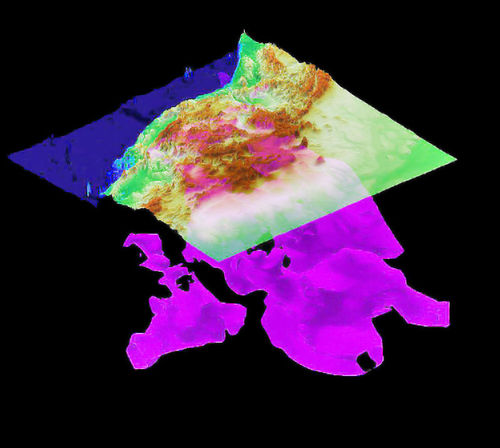


 (From
(From 


 I am assuming (and praying) that's a photoshop job; I live too close to the ocean (about 50 miles as the crow flies) to feel safe if that thing and its family are running around loose. (From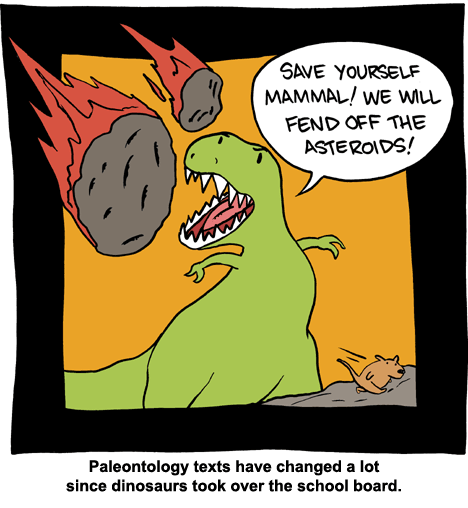











 Posts
Posts