Showing posts with label Books. Show all posts

Friday, August 30, 2013

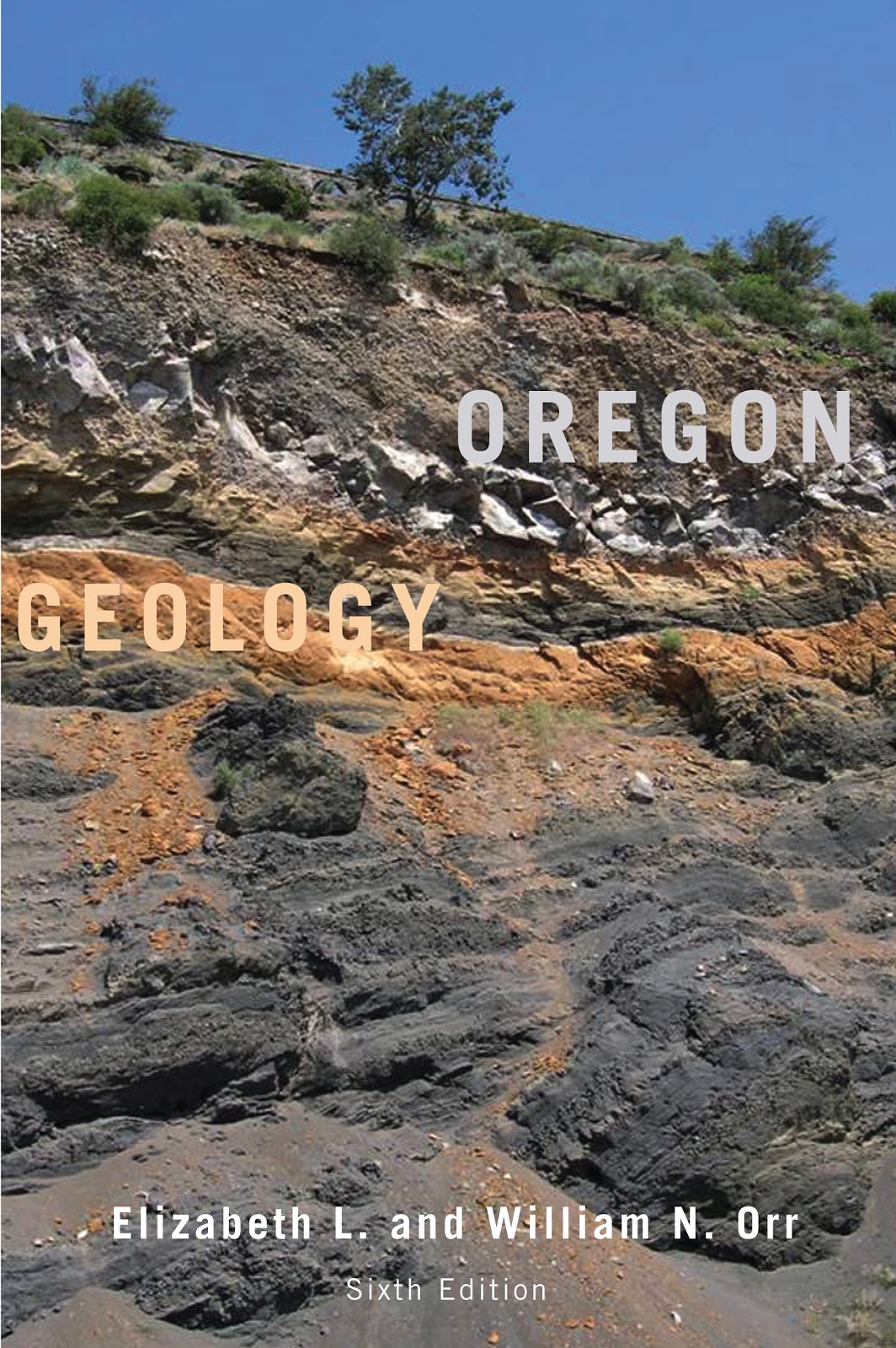
Book Review: Oregon Geology, Sixth Edition

(Image from here) This is an entry for Accretionary Wedge #59, on the topic of geology field guides.

As noted at the bottom of the cover, this is the sixth edition of a book first written in the early 1960's by Ewart Baldwin. I have, at one time or another, owned each of those editions, and as a rule, I find them indispensable. Baldwin was a stratigrapher, and the early editions reflected that- heavy on unit names and discussion of plausible environments. Prior to the acceptance of plate tectonic theory, though, and the concept of terrane accretion in particular, this must have been a terribly frustrating region to try to work out broad geological relationships. It still frequently is, but the concepts developed from 1980 to the end of that decade marked an enormous leap forward.

A great deal of the work in this understanding was done during that decade, and I looked forward eagerly to the arrival of the GSA Bulletin and Geology each month, and regularly stopped by the OSU library to skim through tables of contents looking for pertinent articles. Starting with the fourth edition, in 1992, the Orrs collaborated with Baldwin, and began seriously integrating the plate tectonic revelations of the previous fifteen years. In the fifth edition, 1999, Baldwin was no longer listed as an author, but the Orrs followed the same organizational format, and greatly expanded on the role of plate tectonics in Oregon's geologic evolution.

Since I quit following the professional literature at the time I started my master's work in education in 1991 - lack of time, not lack of interest- I presumed work was continuing, but had no idea what was being accomplished. Very little of that was reflected in the 1999 edition- that is, most of the updates there were already somewhat familiar to me.

With the sixth edition, though, there is a great deal of new material that I've not seen before, and it's exhilarating to go through it. A new feature is some short biographical sketches on geologists whose work has been foundational to our current understandings in each chapter- a nice touch. And it looks as if there are an additional 50 pages or so.

Some caveats: this is not a book I personally would recommend that one should try to sit down with and read. It is an extremely useful reference, but I tend to consume it a few pages at a time to satisfy a particular question. It is fairly dense- it is not "fun" to read. The authors make no pretense they're out to entertain you- though if geology is a passion (raises hand), it is quite engaging. Sadly, I cannot recommend this for raw beginners. On the other hand, if you're not put off by terminology (the book does not have a glossary, so you need to either know the words or use an external reference), have a decent grasp of internal and surface earth processes, and some experience at "thinking like a geologist," whatever that means, this would be an excellent resource for those living in the PNW, or even visitors looking to understand the foundations of this magnificent state. In other words, I would describe this as must-have for anyone with the first year geology sequence, or equivalent, under their belt who expects to spend time in Oregon. While it is not a "field guide" in the sense that it doesn't give you nice mile markers to a series of stops along a route, it is a text I carry with me on trips that get into areas with which I'm not as familiar. It's an incredibly helpful on-the-fly reference.

The organization is quite straight-forward: Oregon is broken into a number of physiographic provinces based on landforms and bedrock geology. The text addresses each of these from oldest to youngest. While there is obviously some overlap in age, each of these provinces has, for the most part, it's own unique geologic history, and the organizational structure works very well.

The book is heavily illustrated with maps, sketches, charts, diagrams, cross-sections, et cetera. Which brings me to a minor quibble, and I think, the reason for the name change from "Geology of Oregon" to "Oregon Geology" The previous editions were published by Kendall-Hunt (incidentally, a publisher by whom I've been almost entirely pleased with respect to their geo publications), and I'd not realized how much their printing quality affected my appreciation for the work. The new edition was published by OSU Printing, and while the image quality isn't bad, neither is it terribly good. Maps seem a little muddy. Identifiers need some squinting to make out. On the other hand, the fifth edition cost in excess of $60; this one is offered at Amazon for roughly a quarter of that, $16.37. So I suppose some loss of image quality is worth the ~$50 savings.(Good Lord! Just checked: Kendal Hunt still offers the 5th edition... at $128! NOPE!) My suspicion is that copyrights held by KH necessitated the name change.

So, to summarize, this is an extremely useful book that will eventually become dog-eared from frequent referencing and harsh treatment in the field. Get a little geology under your belt before trying to use it, but if you spend any time in the state as a geology enthusiast, this book is a necessity.

And to close, I've found many errors in Roadside Geology of Oregon, and have been told of many others. It was not a terribly useful book when it was first published in 1978, and with no new editions since then, it's pathetically out of date. I've been unimpressed with that series generally, but the Oregon edition in particular is just heinous.

Tuesday, August 13, 2013

50 Science Fiction-Fantasy Novels

Meme Time! Here's the list, from this post, where they thoughtfully discuss their criteria and limits (No more than one book or series per author, for example). Despite the waste of virtual paper, the blank list is appended below my annotated list, so you don't have to extract my added text. (I've learned that if you drop formatted text directly into HTML compose mode, it wipes the formatting clean, to plain text.)

Standard rules: bold the ones you've read, * the ones you found particularly outstanding, / the novels or series you've only read a fraction of, that is, not finished. ? if you're not sure. (I haven't read much new SF in 20 years, so I have a number in that category; memories are not forever. Add notes as desired. Make a suggestion or two for ones they missed. Or, you know, make up your own rules.
  1. Ubik, Philip K. Dick
  2. Ender’s Game, Orson Scott Card*
  3. The Lord of the Rings trilogy, J.R.R. Tolkien*
  4. The Handmaid’s Tale, Margaret Atwood ?
  5. Dhalgren, Samuel R. Delany
  6. A Song of Ice and Fire, George R.R. Martin
  7. Frankenstein, Mary Shelley
  8. The Gormenghast series, Mervyn Peake Excellent, but too depressing for a *
  9. The Moon Is a Harsh Mistress, Robert A. Heinlein
  10. Kindred, Octavia Butler- I know I've read a couple novels by her, but not this one.
  11. The Left Hand of Darkness, Ursula K. Le Guin It's been a LONG time, but I think*
  12. Nine Princes in Amber, Roger Zelazny
  13. Jonathan Strange & Mr. Norrell, Susanna Clarke
  14. Slaughterhouse-Five, Kurt Vonnegut*
  15. The City & The City, China MiƩville
  16. The Once and Future King, T.H. White
  17. The Mists of Avalon, Marion Zimmer Bradley
  18. Zone One, Colson Whitehead
  19. The Harry Potter series, J.K. Rowling / First book only and movies, but in process of acquiring the whole series. When complete, I'll read the whole thing.
  20. The Time Quartet, Madeleine L’Engle / 1st book only (Wrinkle in Time)
  21. The Chronicles of Narnia, C.S. Lewis Loved this as a youngster, hated it as adult. Like I need to be beaten about the head with Christian symbolism.
  22. His Dark Materials, Philip Pullman
  23. The Female Man, Joanna Russ
  24. Twenty Thousand Leagues Under the Sea, Jules Verne
  25. Brown Girl in the Ring, Nalo Hopkinson
  26. Solaris, Stanislaw Lem
  27. The Hitchhiker’s Guide to the Galaxy, Douglas Adams *for the first three, then it gets too dark.
  28. The Dune Chronicles, Frank Herbert*
  29. Nineteen Eighty-Four, George Orwell Like Gormenghast, excellent, but too depressing for a *
  30. Snow Crash, Neal Stephenson
  31. The Stars My Destination, Alfred Bester
  32. Neuromancer, William Gibson
  33. American Gods, Neil Gaiman Only thing I've read by him, and not terribly impressed. Need to try others.
  34. The Foundation series, Isaac Asimov
  35. Discworld, Terry Pratchett / Only 2 or 3 of series, damned if I know which ones.
  36. Alice’s Adventures in Wonderland, Lewis Carroll** My all-time, life long, favorite book. By the end of elementary school, I darned near had the whole thing memorized.
  37. Among Others, Jo Walton
  38. Brave New World, Aldous Huxley / Bored me to death. Didn't finish
  39. The Last Unicorn, Peter S. Beagle ?
  40. The Drowned World, J.G. Ballard
  41. Witch World, Andre Norton ?
  42. Something Wicked This Way Comes, Ray Bradbury
  43. The Time Machine, H.G. Wells
  44. Never Let Me Go, Kazuo Ishiguro Movie only. Despite comments at the source site, I quite liked it.
  45. Little, Big, John Crowley
  46. The Dragonriders of Pern series, Anne McCaffrey / A few, but again, they got dull
  47. How to Live Safely in a Science Fictional Universe, Charles Yu
  48. The Enchanted Forest Chronicles, Patricia C. Wrede
  49. The Castle trilogy, Diana Wynne Jones
  50. The Giver, Lois Lowry
One nice thing about this list is that it gives me some clues about which more recent authors I should be catching up with. Two authors I think should be included are Connie Willis, who's almost always excellent, but I'll go with her Doomsday Book and Sherri Tepper. For her, I'll go with The Family Tree, as that one is not as grim and brutal as many of her novels can be. Looks like my bolded count is 31, but quite a number of those are only partials.

Here's the "blank." Wanna play?
  1. Ubik, Philip K. Dick
  2. Ender’s Game, Orson Scott Card
  3. The Lord of the Rings trilogy, J.R.R. Tolkien
  4. The Handmaid’s Tale, Margaret Atwood
  5. Dhalgren, Samuel R. Delany
  6. A Song of Ice and Fire, George R.R. Martin
  7. Frankenstein, Mary Shelley
  8. The Gormenghast series, Mervyn Peake
  9. The Moon Is a Harsh Mistress, Robert A. Heinlein
  10. Kindred, Octavia Butler
  11. The Left Hand of Darkness, Ursula K. Le Guin
  12. Nine Princes in Amber, Roger Zelazny
  13. Jonathan Strange & Mr. Norrell, Susanna Clarke
  14. Slaughterhouse-Five, Kurt Vonnegut
  15. The City & The City, China MiƩville
  16. The Once and Future King, T.H. White
  17. The Mists of Avalon, Marion Zimmer Bradley
  18. Zone One, Colson Whitehead
  19. The Harry Potter series, J.K. Rowling
  20. The Time Quartet, Madeleine L’Engle
  21. The Chronicles of Narnia, C.S. Lewis
  22. His Dark Materials, Philip Pullman
  23. The Female Man, Joanna Russ
  24. Twenty Thousand Leagues Under the Sea, Jules Verne
  25. Brown Girl in the Ring, Nalo Hopkinson
  26. Solaris, Stanislaw Lem
  27. The Hitchhiker’s Guide to the Galaxy, Douglas Adams
  28. The Dune Chronicles, Frank Herbert
  29. Nineteen Eighty-Four, George Orwell
  30. Snow Crash, Neal Stephenson
  31. The Stars My Destination, Alfred Bester
  32. Neuromancer, William Gibson
  33. American Gods, Neil Gaiman
  34. The Foundation series, Isaac Asimov
  35. Discworld, Terry Pratchett
  36. Alice’s Adventures in Wonderland, Lewis Carroll
  37. Among Others, Jo Walton
  38. Brave New World, Aldous Huxley
  39. The Last Unicorn, Peter S. Beagle
  40. The Drowned World, J.G. Ballard
  41. Witch World, Andre Norton
  42. Something Wicked This Way Comes, Ray Bradbury
  43. The Time Machine, H.G. Wells
  44. Never Let Me Go, Kazuo Ishiguro
  45. Little, Big, John Crowley
  46. The Dragonriders of Pern series, Anne McCaffrey
  47. How to Live Safely in a Science Fictional Universe, Charles Yu
  48. The Enchanted Forest Chronicles, Patricia C. Wrede
  49. The Castle trilogy, Diana Wynne Jones
  50. The Giver, Lois Lowry

Wednesday, May 25, 2011

Don't Panic, It's Towel Day

Shoot, almost missed this. I looked it up earlier in the month, and somehow got it into my head it was on May 28th. Thankfully, someone else mentioned it was Towel Day, I double checked, and so it is! For better or for worse, I had been seriously considering draping a towel around my neck for the occasion, and I haven't. Maybe next year. For this year, though, no sheepish explanations that I am indeed a serious nerd.

Monday, March 14, 2011

Geopunnery

Evelyn at Georneys is hosting a book contest: you can win a copy of the recent book by Gillian Turner called "North Pole South Pole: The Epic Quest to Solve the Great Mystery of Earth’s Magnetism" by submitting your most side splitting, eye wincing, mind rending geology pun. I linked to a somewhat obscure mineral pun I devised a couple of years ago as a place holder, but it was not intended to be an actual submission. The comments have been pretty busy, but I wanted to come up with something original. The result actually takes me a while- I want to try to craft it into a relatively short set-up, and order everything for best comic effect. Here's my final submission:
A stone mason with a powerful phobia of indoor lighting was accused of misrepresenting the "black granite" he used in a counter top. He was charged with basalt, but when his condition came to light, the charges were dismissed due to lamprophyre.
Geologists have a perennial gripe with the phrase "black granite," which is like a furry fish: there ain't no such thing. "Charged with basalt" seems obvious, but I don't think I've ever heard this pun before. And I got a giggle out of "lamprophyre" interpreted as a phobia of indoor lighting. Lamprophyres are weird, obscure rocks that no normal person would ever need to know about, therefore, I'm very fond of them. My favorite was an outcrop near the eastern end of lake Nipissing in Ontario with awesome veins of barite, which has sadly been mostly obliterated by road construction.

Thursday, February 3, 2011

Not My Fault

Predictable, really:
Rumsfeld accepts almost no blame for the mistakes in Iraq in his 800-page autobiography Known and Unknown, copies of which have been obtained and published in excerpt by the New York Times and the Washington Post. Instead, he fingers the US diplomat in charge of postwar Iraq, Paul Bremer, and criticises the former secretary of state, Colin Powell, and the former national security adviser, Condoleezza Rice.
Yeah, it was all those known unknown unknown knowns that were the problem. And all those other guys. And the President and Vice President. And Senators and stuff. But Saddam is gone, so it's all good. Really. I just feel peachy about the whole thing.

800 pages of stuff I can get for free in any cow pasture. I enjoy books on politics- a surprise I wasn't expecting when I was younger- and frequently learn a lot from them. And, yes, that includes a number of books written from a conservative perspective, not just Michael Moore and Al Franken. But I won't be reading this one, I'm afraid.

Tuesday, January 25, 2011

All I'm Going to Say About SOTU Today

(Clay Bennett) Didn't watch it, haven't read it, haven't read any commentary on it... yet. If it's important, it'll keep. If not, it doesn't matter what I think. Heading home later than normal, and looking forward to finishing Robert Charles Wilson's Blind Lake- nothing like some good character-based scifi (albeit with some good hard science and plausible non-science) to put a days worth of irritating news behind one's self.

Wednesday, December 8, 2010

I Hope This Is Made Available Online

Douglas Adams fans, prepare and celebrate: BBC 4 is doing a television adaptation of Dirk Gently's Holistic Detective Agency. I will see it sooner or later. Oh, yes. I will. I'd rather sooner.

Thursday, November 4, 2010

Derision Points

So Dubya's new book thingie is set to be released next Tuesday, but the NYT has the review today. I'm sure the review makes for better reading than its subject.

Certainly it’s the most casual of presidential memoirs: how many works in the genre start as a sort of evangelical, 12-step confession (“Could I continue to grow closer to the Almighty or was alcohol becoming my god?”), include some off-color jokes and conclude with an aside about dog poop?

The prose in “Decision Points” is utilitarian, the language staccato and blunt. Mr. Bush’s default mode is regular-guy-politico, and his moods vacillate mainly among the defensive and the diligent — frat boy irreverence, religious certainty and almost willful obliviousness.

I was one of the lucky few given the opportunity to get a sneak preview of the draft of a chapter, posted in its entirety here.

Friday, October 1, 2010

Saturday, September 11, 2010

Google Middle Earth

I'm sorely tempted to post this to Pathological Geomorphology, but I'm afraid I don't know enough about the technical details of this imaginary landscape. Have a gander at the most detailed map of Middle Earth I've ever seen. Use the "Zoom" control to move in or out, and drag the screen to move the map to desired positions. Below is a screen capture. (Note that despite the title, Google has nothing to do with this.)

Monday, August 23, 2010

The Control of Nature

I just finished rereading The Control of Nature, by John McPhee, for the umpteenth time last night. I have enjoyed every single piece of his I've read- including things that are seriously out of date, like The Curve of Binding Energy. The Control of Nature tops my list in terms of enjoyability and books I've recommended to others. In it, McPhee deftly explores the difficulties and uncertainties associated with trying to "control" nature. To a degree, this is part of what it means to be human: we shape our environment to fit our needs. But when we try to "control" one of the largest rivers in the world, a voluminous eruption of basalt, or debris shedding off one of the fastest rising and fastest eroding mountain ranges in the the world, only losing would be obvious and clear-cut. What would a "win" look like on anything but a temporary basis? Even if you're not a geologist, if you have an interest in "natural disasters," and the human condition, this is a must-read book. "History shows again and again how Nature points out the folly of men."

I tend to think of Godzilla as purposeful, having intention; my understanding is that in Japanese culture, he/it symbolizes a force of nature. In the latter sense, the above video clip does a fine job of illustrating McPhee's themes. (lyrics here)

Thursday, August 19, 2010

Field Notes From An Idiot

I've seen this around in various places recently... typical wingnutty wasting of time and resources to make a meaningless statement, from someone who has no idea of the implications of the ideology he thinks he's rooting for. Yawn. An everyday occurrence in this dying country.
But the post that made me sit up and take note was at TYWKIWDBI yesterday, where it was pointed out that "he used Interstates, GPS and the internet which were all government funded projects..."

Saturday, August 14, 2010

GUTOP

Not a surgical procedure for weight loss, but "Grand Unified Theory of Palinisms." Jacob Weisberg, who you may remember as the archivist who collected eight-plus years of Bushisms, is still at it, but with a new collection. Following is an excerpt from his book Palinisms: The Accidental Wit and Wisdom of Sarah Palin, due out in a couple of days, and previewed at Slate:
But the best Palinisms of all result when the huntress encounters something she wasn't hunting for—that is, when Sarah Palin comes into contact with most anything to do with domestic, foreign, or economic policy. It is this situation that generates those priceless let me tap-dance and, also, sing for you a little song while you think of a different question moments. One such was the juncture in her mind-boggling 2008 interview when Katie Couric asked Palin to name a Supreme Court decision she disagreed with, other than Roe v. Wade. Surrounded by hostile forces, out of cartridges for her Remington, she bravely held her ground and kept pulling the trigger, to no effect:
Palin: Well, let's see. There's—of course in the great history of America there have been rulings that there's never going to be absolute consensus by every American, and there are those issues, again, like Roe v. Wade, where I believe are best held on a state level and addressed there. So, you know, going through the history of America, there would be others. But, um.

Couric: Can you think of any?

Palin: Well, I would think of any again that could best be dealt with on a more local level maybe I would take issue with. But, um, you know as a mayor and then as a governor and even as a vice president, if I am so privileged to serve, I would be in a position of changing those things, but in supporting the law of the land as it reads today.
Weisberg's Bushisms were (and are-Shrub's limited public appearances mean fewer misunderstatementisms, but Weisberg has kept the site up to date) often side-splitting, and I much appreciate his work in putting together the definitive collection. Likewise, while the Palinisms project seems a little limited at this point, I expect it will be expanded after the book makes its initial run.

However, I think that simply listing all these strange quotes (and they are strange) for the LOLs misses the point. First, it gets old pretty quick. Second, it overlooks, even obscures, the strange phenomenon of Palin: here is a person who apparently cannot tack together an intelligible sentence in the English language without a prompt, and even then it's iffy. Yet people are paying her hundreds of thousands of dollars, even millions, for her writing and speeches. What does that say about the media, and what does it say about us? That is the book I'd like to read.

For me, the definitive compilation of Bushisms, and what it says about our culture, is Mark Crispin Miller's The Bush Dyslexicon: Observations on A National Disorder. Oh sure, there's lots of yucks in the book, some tear-inducing. But it's placing them in context, and showing how and why Bush was a perfect match for modern TV, while Gore was a poor fit indeed, that makes it such a compelling read. For people who weren't paying attention pre-9/11, I still highly recommend it (here's a good review, and here's the Amazon Page), and though I haven't read any reviews of Weisberg's book yet, I hope he has tried to do a little of this needed contextualization of Palin's malapropisms. Yeah, such stuff is funny to a point, but it won't be if Caribou Barbie decides to run for POTUS and we let the media play us for suckers yet again.

Monday, July 26, 2010

Going Viral on a Computer Near You

I skip the majority of video clips that come through my innernetz thing, but every now and then one shows up quickly on many sites. Those, especially if they're fairly short, it often behooves me to watch. Below is an example of one that had showed up on four or five sites before I took three minutes to watch it. Three minutes very well spent, I must say. But then, I don't consider myself a member of "good society" either.

Tuesday, July 13, 2010

I Write Like Adams and Poe

I suspect I write like a lot of different people, but I'm nothing like comparable to these two. Based on yesterday's post, "Sacrifices," I write like Adams.
I write like
Douglas Adams

I Write Like by MƩmoires, Mac journal software. Analyze your writing!

Based on Saturday's post, "Why No Oil Wells Off Oregon's Coast?" I write like Poe.
I write like
Edgar Allan Poe

I Write Like by MƩmoires, Mac journal software. Analyze your writing!

I'm assuming the second link in each image will take you to the site, but here it is again, if not. I'm flattered, but I don't assign a lot of meaning to this.

Wednesday, June 30, 2010

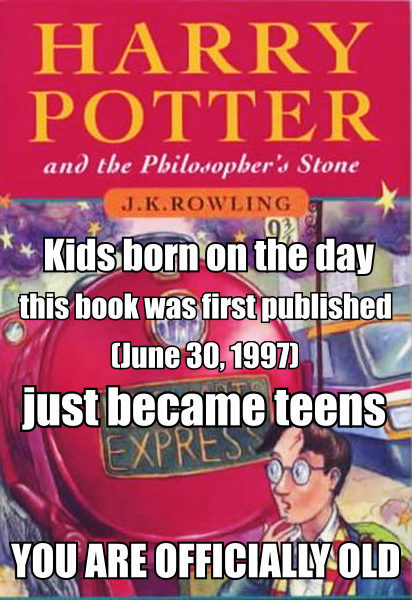
Today's Anniversary... You Get Used To It

Via The Daily What. What you don't get used to is the way fixed periods of time- say, for example, 13 years- seem to get shorter and shorter and shorter. At some point you realize that it does seem that way, but you never really get used to it.

Followup, Thurs. July 1: Gad! Another 13-year anniversary! According to The NYT, "On July 1, 1997, Hong Kong reverted to Chinese rule after 156 years as a British colony." I don't really recall the publication of the HP book, nor do I remember when it really started to get traction. But I do remember the reversion of Hong Kong... I probably would have guessed it was before 9/11, but not much earlier. Speaking of which, 9 years already? Sheesh!

Friday, May 14, 2010

Philip K Dick

He makes you work awfully hard, but his stories are haunting. I read an article the other day saying that because of his numerous film adaptations, he's more familiar to younger people than to people of my generation. I look forward to this one. I don't recognize the title, but the themes here are exactly what I would expect from Dick. What I wouldn't expect is a happy (or at least clear) ending.

Thursday, April 29, 2010

Retitling Laura

Via BuzzFeed, here's the "funny meme I just have to participate in" of the day: retitling Laura Bush's new book cover. 'Cause "“Spoken From The Heart,” is just too insipid. You can download the blank here.
Gratuitous "Joker" reference, yes, but the resemblance is creee-py!
Yes, Laura, we've been meaning to talk to you about that...
I think this one is my favorite.

Wednesday, April 28, 2010

Derision Putz

It was announced a bit over a year ago that dubya was going to make a book, and it was announced yesterday that it would be published on November 9 of this year.

I can't wait.

As it happens, I was privy to a sneak preview of an early draft. And since there is currently a meme circulating in the left-leaning portion of the political blogosphere to provide a more appropriate cover, here's my offering to reflect that excerpt, Chapter 3.
And in case you didn't notice the title of the post, I'd suggest we change the title of the book, as well.

Other particpants that I know of thus far are:
Tengrain and Scissorheads at MPS
Blue Gal
Ian David
Mark Hoback at FGAQ
Terrant at My Corner To Vent

Visit and enjoy. These versions are guaranteed to be more edifying and entertaining than the real thing.

Wednesday, January 27, 2010

Excerpts From a Prescient View of US Politics and Economics

"Just the place for a Snark!" the Bellman cried,
As he landed his crew with care;
Supporting each man on the top of the tide
By a finger entwined in his hair.

"Just the place for a Snark! I have said it twice:
That alone should encourage the crew.
Just the place for a Snark! I have said it thrice:
What I tell you three times is true."
(...)
A Billiard-marker, whose skill was immense,
Might perhaps have won more than his share--
But a Banker, engaged at enormous expense,
Had the whole of their cash in his care.
(...)
"His form is ungainly--his intellect small--"
(So the Bellman would often remark)
"But his courage is perfect! And that, after all,
Is the thing that one needs with a Snark."
(...)
The last of the crew needs especial remark,
Though he looked an incredible dunce:
He had just one idea--but, that one being "Snark,"
The good Bellman engaged him at once.
(after explaining that the butcher could only kill beavers...)
The Beaver's best course was, no doubt, to procure
A second-hand dagger-proof coat--
So the Baker advised it--and next, to insure
Its life in some Office of note:

This the Banker suggested, and offered for hire
(On moderate terms), or for sale,
Two excellent Policies, one Against Fire,
And one Against Damage From Hail.
(...)
He had bought a large map representing the sea,
Without the least vestige of land:
And the crew were much pleased when they found it to be
A map they could all understand.
I won't be watching the State of the Union Address tonight, most likely. I'll read it tomorrow. I'm tired of Obama's oratory... I'm tired of feeling persuaded that he believes things he doesn't.

The poem is of course "The Hunting of the Snark," and while I love "Alice in Wonderland," I think this is my favorite work of Lewis Caroll. (Other formats here)