Showing posts with label Non-Interzone People. Show all posts

Monday, June 28, 2010

Turn, Turn, Turn

Senator Robert Byrd has died. I grew up across the river from West Virginia, and his name, up until this morning, probably has been the living political name I have known longest. He began his tenure as a senator 10 months before I was born. I don't have strong feelings one way or the other about the guy; sometimes I agreed with him, other times not, though I have to admit in recent years when he has come to my attention it has more often been with a vigorous nod of agreement. The thing I haven't seen pointed out (yet) is his sheer eloquence. His voice wasn't that of James Earl Jones, or Morgan Freeman, but his choices of wording, phrasing and delivery at its best could be breathtaking. I always admired his oratory, and I will miss him.

Followup: Jill of Brilliant at Breakfast offers a much more fitting and poignant eulogy, along with some extended quotes, that illustrates the magnitude of our loss. On the subject of US torture policy, he said:
The rule of law is not just a lofty concept to which we should aspire only when convenient. It is a fundamental principal upon which our Republic was founded, and it is the foundation of our free society. I understand the desire to look forward and to forge a new path on high ground instead of on the low road of the past eight years. But to use the need to move on as a reason not to investigate basic human rights violations is unacceptable. Excusing individuals at the highest levels of government from adhering to the rule of law, whether in wartime or not, is a dangerous precedent, for it undercuts the principle of accountability which permeates representative democracy.

Sadly, the world will discover more and more about the acts committed at Guantanamo Bay, Bagram, and elsewhere around the world. There is no avoiding that eventuality. It is our choice as a nation whether to pursue the path of truth ourselves, or leave the details of the abuse to be painfully revealed by others. Releasing the OLC memos was a courageous and admirable first step. But we must not stop there.

Whether it is through an independent investigation, a "Truth Commission," a Congressional investigation, or a criminal investigation by the Department of Justice, action must be taken. As long as those who condoned and approved these despicable acts are permitted to escape the consequences, we allow our moral standing in the world to be severely compromised. September 11 did not suddenly legalize torture, nor did it exonerate those who authorized such a heinous deviation from the rule of law. How we address these abuses will shape the image of the United States for decades. In order to truly clear our good name and put the past behind us, the United States must strive to be sure that this dark period of sick and secretive torture schemes receives the scrutiny it deserves.
Followup 2: The Guardian knows how to do a good biographical obituary. Fascinating man. One quote in particular shows how Byrd didn't fit with the Dixiecrats:
His attitude changed irrevocably in 1982, after a teenage grandson was killed in a road accident: "The death of my grandson caused me to stop and think. I came to realise that black people love their children as much as I do mine."
I don't think this simple, humane thought ever crossed Strom Thurmond's mind.

Friday, May 21, 2010

Doing Geology

The first two talks I saw yesterday were about ongoing work at the Altiplano Volcanic Complex (APVC) in Chile. Above is a Flash Earth image of the area; click the pic to embiggen or explore further here. I'm certain the image is in the right general area, but I didn't get enough information to know for certain whether it actually covers any of the specific sites under discussion.

I was uncertain exactly what to expect from these GeoDay talks, but they are essentially grad students presenting what they're doing in their research; most have done some of the work, but the focus is not on presenting and defending results and conclusions. Instead, the focus is on the how and why: why is the research relevant or important, and how will it be carried out? After watching eight of these 20-minute presentations, I came away favorably impressed with the format's ability to give students an opportunity to practice their public speaking and presentation skills in a relatively low-risk setting.

The first talk was by Stephanie Grocke, (The links I will attach to each name will take you to the relevant abstract) who is examining melt inclusions to determine whether there was a volatile gradient in the pre-eruption magma chamber. Her talk was the first to really strike me with the realization of how far geochemical measurement techniques have advanced over the last 20-25 years: the resolution is pretty incredible to me. Melt inclusions are tiny bits of original melt that have been isolated within crystals since before eruption, and thus contain a record of the magma as it was originally composed in-situ. One example she showed looked from the scale bar as if it was approximately 100x200 um, or 0.1x0.2 mm... for those who want their dimensions in English, that's about 4 by 8 thousandths of an inch. And that was a large one. The idea that you can accurately measure the composition of anything that small is amazing.

Her hypothesis is that volatile components (CO2 and H2O) were more abundant in the top of the magma chamber, driving the initial Plinian eruption style. Later in the eruption, a decrease in volatiles led to a decreased velocity of the eruptive column, and thus to the column's collapse, resulting in a widespread (and startlingly thick!) ignimbrite deposit. Stephanie visited the area last November and collected samples, and is now in the midst of (what looks to me like) the mind-numbingly tedious process of separating and preparing quartz and feldspar crystals with pristine vitreous inclusions- there's a set of criteria for what constitutes a satisfactory inclusion for analysis- for later compositional analysis. It turns out Stephanie moved to Corvallis from very close by the area from which I moved to Corvallis, within 20 miles or so!

The second talk was by Casey Tierney, working in the same general area, the APVC, but on domes rather than ignimbrites. The task he has set himself is to analyze accessory minerals- notably zircon and sanidine- to get at the thermal history of the magma chambers that erupted to form the domes in question. Zircon starts crystallizing at about 850 C, so the innermost zones of that mineral would record the age at which the magma first cooled to that temperature. Sanidine remains diffusive with respect to Ar essentially until it erupts, so its age effectively measures the eruption's date. The difference between the U/Pb age from zircon and Ar/Ar age from sanidine gives a (minimum?) residence period for the magma in the magma chamber. And again, I'm sort of shocked that there is enough confidence in the accuracy and resolution of these dating techniques to meaningfully get at periods that are certainly going to be small compared to the decay times involved in those radiometric series.

Related questions that can be addressed with residence time include magma source; was it one batch of magma, or were new batches added during the residence time? Also, thermal history; if new batches were added though time, it's possibly a magma chamber could be rejuvinated. Otherwise, one could conclude that the system is slowly cooling. Based on other studies of similar dome complexes in the Andes, Casey provisionally expects to find this field was a single source, and that it is slowly cooling.

I'm going to skip the geography presentations; I found them interesting, but I simply don't know enough to meaningfully discuss what I saw, and worry I'd make a hash of them. If you're interested, you can go back to the GeoDay post and read the abstracts. Certainly the topics are of interest to geo-literate people, but they're far enough away from my knowledge base that I'm hesitant to say much.

At 2:00, Wendy Kelly presented her plans to develop an interpretation training manual for Shenandoah National Park and its employees. To tease that apart a little further, the document is intended to guide and educate rangers and other staff who have frequent contact with the public they serve on the geology and geologic history of the park, and how to help the public understand and appreciate that geology. Wendy's talk focused primarily on the logistics of developing the manual, not on laying out the current knowledge of the geohistory of the area- this might have been a little disconcerting to the "real" geologists in the audience, but was actually kind of a relief for this science educator to see.

As Wendy pointed out, this issue really is one of interpretation- of finding ways to translate complex concepts scientists become accustomed to tossing around with shorthand terminology to language that the general public can understand.

As an offhand example, let's take the phrase "arc-continental collision." To a geoscientist, each of those words carries an abundance of information and presumed assumtions: arc= a chain of volcanoes arising from subduction, partial melting and resultant volcanism, typically in the form of evolved, more silica-enriched melts. Volcanism is often (though certainly not always) in the form of stratovolcanoes. Continent= thickened crust with an overall granitic-granodioritic composition; central (cratonic) area is largely inactive, but may alternate between epicontinental seas and periods of erosion, resulting in a thin (compared to total crust thickness) veneer of mostly horizontal, undisturbed, sediments. Edges may be active- undergoing interactions with adjacent plates (think US west coast), or inactive- attached to (and actually the same "plate"as) adjacent oceanic crust (think US east coast). Collision: two plates collide with each other, typically creating an episode of mountain-building and deformation, and possibly associated volcanism. Afterward the two plates are attached, and will share a common geologic record- though rocks predating the collision may have wildly disparate histories. Now look back at that paragraph. Three simple words, "arc-continental collision"- which also have their own, different, commonly understood colloquial meanings, further confusing the task of interpretation- carry an enormous amount of assumed meaning in a conversation between geologists. And it would be easy for me to expand that paragraph many times to clarify other meanings and assumptions of implied meaning.

But to a member of the general public, none of that shared understanding is there- at least you have to start with that assumption.

So the task Wendy has at hand is to "translate," via careful choices of language, graphic representations, analogies, metaphors and similes, an extremely complex (therefore interesting) geologic record into terms park employees can understand well enough that they can do the same for the public. Not an easy task, but one I'd love to tackle myself.

Overall, her approach is to have four sections: a broad overview/sketch of Appalachian geohistory, a more detailed technical regional overview that delves into the finer points, then a parallel pair of sections at the local level: an overview of the geological, biological and cultural history of the park area, and a technical examination of the historical details.

I had two minor quibbles: Wendy stated that the general public is not terribly interested in geology, and went so far as to say they're afraid of science. I disagree. I've found that the vast majority of people I've interacted with love to learn about the history of the landscape and materials that surround them, but you do have to approach the subject at their level. That can vary tremendously from one person to another, of course. Over the last 20 years, I have come to believe that all human beings have an innate desire to understand the world around them- that's our competitive edge. In terms of physical prowess, there's not much we're terribly good at: we're not specialists. Our prowess is in understanding and predicting behavior in our surroundings, and manipulating those surroundings in ways we believe will benefit us. From that perspective, you can see why I believe it's an innate tendency. What people are afraid of is not science, but that learning science will be more work than it's worth. An interpreter's or educator's job is to get the learner past that fear.

The second quibble is that there was no discussion of an evaluation plan. This is a geology degree, not an education degree, but it's troubling (though very, very common) that these things are produced and put out there with no plan to judge whether it had an effect, or even whether it reached its intended target audience (in this case, visitors to Shenandoah NP).

The final geology presentation I saw was Jennifer Cunningham's on developing better models on trace element partitioning in clinopyroxene. Basically (OMG, awful geopun there... completely unintentional, mind you), clinopyroxene is a very important component of mafic igneous rocks, and having better numerical models of how trace elements partition between those mineral grains and the rest of the melt has the potential to allow better geothermometry (estimating temperatures of petrogenesis) and geobarometry (estimating pressures of petrogenesis).

I have an enormous amount of respect for a student willing to cull data from literally hundreds of articles from the geologic literature (and go through hundreds more only to find they don't have relevant data), then go through the further, and perhaps even more tedious, process of developing a better fit algorithm for something in the range of 15-20 trace elements. That said, this is a project I would never want to do, personally. It could be of enormous utility, but I hope she has a strong background in math and especially computer science. She showed a flow diagram illustrating her approach, but didn't say much about how she would actually develop and tweak her models. From my perspective, not knowing much about computer science or statistics, the only practical way I see is having a computer run through many iterations for each element, finding the best fit for the parameters of interest. She may have more streamlined methods to work with, but I suspect this problem wouldn't even have been possible at the time I graduated; it would have required too much computing power. As it was, this one was right at the edge of what I could comprehend. The thought of the problem is fascinating to me, but the thought of trying to actually tackle it is frankly horrifying,

So there you have the geology portions of the GeoDay afternoon. I enjoyed myself, though I get a little anxious being surrounded by large numbers of people I don't know, and was happy to return to my dark little corner in my favorite coffee shop.

Tuesday, March 16, 2010

Tuesday

So I didn't quite manage to find anything Sufficiently Famous to do a "Monday" post yesterday. The closest I came was some guy named Bill Munday who has a Ford dealership somewhere in Texas. Meh. Though had it occurred to me yesterday, not this morning, I would have posted it with the punny title "Mondayn." Nevertheless, I'll go ahead and wish you a lovely Tuesday.

Friday, March 12, 2010

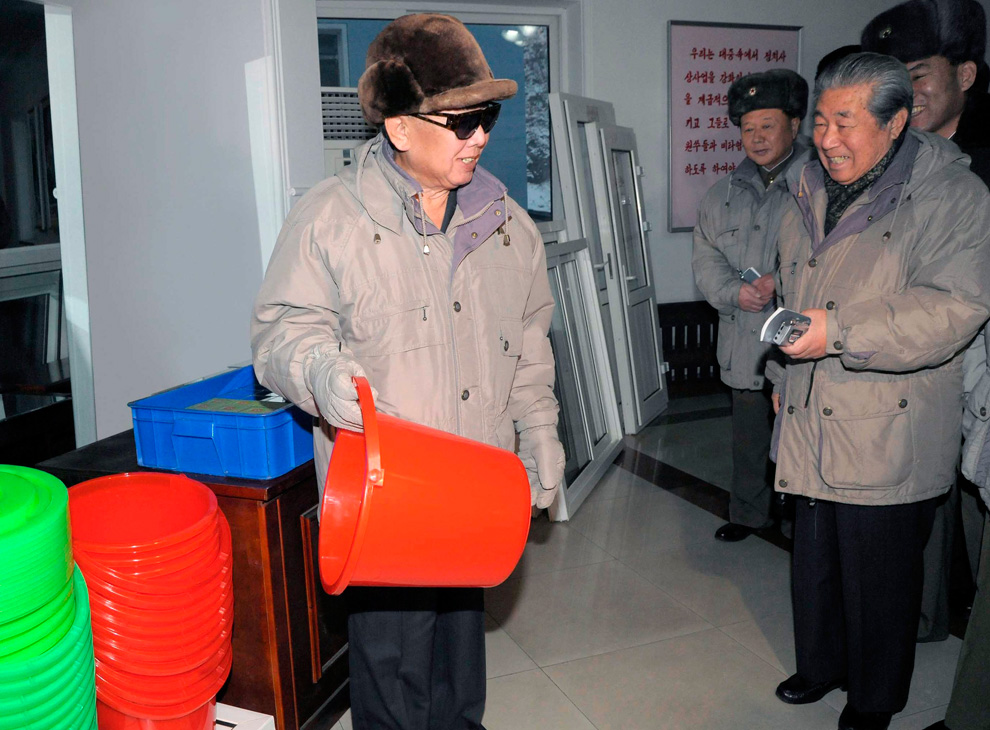
Dear Leader Can Has Bukkit

Surreal, sort of funny and scary at the same time. The Big Picture today features Kim Jong Il looking at stuff.

Monday, March 8, 2010

E-Mails From An A-Hole

I participate in a discussion group with some of my old high school classmates; mostly politics, but other stuff too, from time to time. Earlier, one of the posted a link to the site E-mails from an Asshole. Said A-hole lures in unsuspecting victims on Craig's list who are seeking goods and services with a polite response offering whatever the victim is looking for... then runs the exchange off the rails. USB, who posted the link, later pointed to "Operation: Soccer Escort" as a favorite. I agree.
Original ad:
I am in need of a reliable and SAFE driver to take my 10-year-old daughter home from after-school soccer practice starting in September and ending in late November. She needs to be taken from school in Exton to home in Bryn Mawr. It should take about an hour each day. You will be needed Mon, Tues, Thurs, and Fri. Looking for a safe driver with a clean driving record. E-mail at ***********@comcast.net with references. We can discuss compensation. Thanks!
From Me to ************@comcast.net

Good afternoon.

My name is Mike Partlow and I am very interested in this job. I have a lot of experience driving under dangerous conditions and guarantee your daughter will arrive safely at home every day.

If you are still looking for a dependable driver, please write back.

Sincerely,

Mike Partlow
So far, so good, right? The bait has been taken, time to reel in the catch...
From Kate ******** to Me

Mr. Partlow (can I call you Mike?),

I still am looking for a driver. Good to know you can handle dangerous conditions...but there probably will not be any dangerous conditions; you are just taking my daughter down Rt 3.

Tell me about yourself - are you a professional driver? Do you have any references from past jobs? What kind of car do you own? Is it reliable?

- Kate

From Me to Kate ********

Kate,

You can call me Mike. I was never one for formalities.

A little about myself, I am 37 years old, and worked as a mercenary driver in the Middle East. I have escorted important clients through high-risk areas in Iraq and Afghanistan for five years. I have seen a lot of action, and have ensured the safety of my clients. Out of all the jobs I have done, 90% of my clients arrived at their destination unharmed.
I have just included the beginning of the craziness; you'll have to click over to read the rest, including a shining endorsement from a "previous customer." This is definitely going into my RSS humor folder.

Wednesday, December 30, 2009

THIS is the Way to Learn History

As a high school student, I didn't "get" history; it seemed largely irrelevant. I took some history classes as an undergrad, and found them much easier than I expected, and a bit interesting, but still largely irrelevant. As a grad student, I started to see, via history of science, how very relevant history really is to, well, pretty much everything. And of course, the last nine years have been a real-life immersion course in the importance of history. I still feel pretty ignorant of the subject generally, but at least I've learned to pay attention and learn what I can.

All that is a long-winded preface to pointing out a flash animation of the rise and fall of empires over the last 6000 years in the "middle east." I put the name in quotes, because the map animation zooms and pans to cover much of the Old World during its course. Very Cool! Hat Tip to blogger buddy Pygalgia.

Saturday, November 28, 2009

Delurk Thyself, Spirit in the Shadows!

I'm seeing in various blogs that this weekend all you lurkers- people who visit, but never leave comments- are supposed to leave comments. Hear that? My comment rate is about 1%; for each one hundred visitors (yes, that is tallied, data-logged, and entered into your semi-permanent record), only one leaves a comment. I'm not going to get all fussy about it, but a few more would tickle me... and who knows... I might comment back!

Wouldn't that be special?

Saturday, November 21, 2009

This Is NOT Parody

But it is HILARIOUS.

It's also a real trailer for a real full-length movie.

That is one diverse turnout... I counted at least six segments with Nate in them. And that narrator... America's Most Wanted? CSI: Huntington? The World's Craziest Police Chases? I dunno. I'm guessing this movie will have 5-minute commercial breaks every 10 minutes. The righties would be confused if it didn't.

Monday, November 16, 2009

Go For the Gold

If you're determined to look horrifying and socially repugnant......go for the gold. (Skull Swap)

Friday, October 16, 2009

Hypnotic

MC Escher + Animation = Mesmination? I have probably spent ten minutes or more watching this loop this afternoon. From Julia Segal's Tumblr, Skull Swap.
In other news, fellow geoblogger Silver Fox stopped by my favorite coffee shop for a couple of hours this morning and early afternoon. It was a pleasure to chat for a while, and I felt kind of honored that she made the effort to drive out of her way during her trek from Nevada to Portland for the GSA Convention. Hope the final leg worked out OK, Silver!

Sunday, October 11, 2009

Blogging the Portland GSA Convention

Next weekend, GSA, The Geological Society of America, will have its convention about 90 miles up the road from my little coffee shop. I'm a little sad I can't go, if only to meet up with some of the geobloggers whose interests intersect with mine. GSA has provided some information for bloggers, with what strikes me as a very helpful and progressive attitude. So I'm looking forward to hear about all the happenings up there, folks!

In the meantime, this just showed up; be careful. Be careful about journalists, and don't let them mangle your reports. It's a jungle out there! (Noise to Signal)

Thursday, October 8, 2009

Walmart Bingo

From Darius Whiteplume's tumblr. If you find this amusing, you may also enjoy People of Walmart. I don't follow the latter site; I find it depressing more often than amusing. On the other hand, I have seen some very funny pictures that others have reposted from that site. For example...

Saturday, September 26, 2009

Letter From Honduras

A person I know recently sent me an e-mail from Tegucigalpa, the capitol of Honduras. However frustrated I may get with events in this country, it was a stark reminder that it really doesn't get much better than we have it. In case you're not aware of the situation there, here is a recent article on the events, and here is an excerpt that gets at the crux of the issue:
Armed soldiers toppled Zelaya and sent him into exile in his pyjamas on June 28 after the supreme court endorsed charges of treason and abuse of authority against the leader for repeatedly ignoring court orders to drop plans for a referendum on whether the constitution should be rewritten.
In short, when he tried by referendum to change the constitution, the military threw him out of office and out of the country. He later snuck back in, and is currently holed up in the Brazilian Embassy. Had Bush tried to re-write the electoral rules of our constitution, to be approved by referendum, I hope the military would have thrown him out of office as well. Why Obama and the US are supporting this guy is beyond me.
Recently experienced my first curfew. The city of Tegucigalpa was
shut down for two days. First 24 hours, power was off most of the
time. Using a fork as a sconce, and birthday candles for light, I
read. My computer could play music, so I was pretty set up. Last few
days, curfew has run from 6 pm to 6 am. Thing is, there is no way to
know when/if curfew will be made full time again.

I can't believe how casually 7.3 mm people's liberty is supended here.
The day before yest, I went to buy some food in a 6 hour suspension
of the curfew. The supermarket was so packed I wouldn't have had time
to pay for the food that I could select from what was left. So I went
from neighborhood market to market looking for stuff. Was pretty
successful, and now have enough calories to make it through a week or
so. But as I finished up shopping, I saw everyone was looking down
the street, and I followed their gaze. Some supporters of the
ex-pres, so-called Melistas, had been streaming by, amassing about 200
yards from my apartment. So the riot police were following them,
about 100 or so. I moved towards my place, but everyone else, not
just melistas, moved towards the police. Tear gas was fired off and
the wind, about 10 knots, was moving my way. Just a little of that
stuff is a lot. My eyes were red, my chest twitched, and twitched for
24 hours. But some were trying to kick the cans back towards the
police, which was very dumb. I bet they are miserable right now.

Here, laborers are paid daily because they need the money to eat. No
work, no food. Many other people have no refrigeration, so expect to
be able to buy perishable food every day. Day before yest, everyone's
cars were breaking down due to overheating in traffic jams, making
jams much worse. (No one fixes a car until it breaks down here.)

The angry people look like junkies. Their skin is white, their eyes
are dilated. I can sense at a glance that if they move my way, the
only smart thing to do is run.

The riot police are very restrained in my view. Confronted by similar
violence, American police would crush a crowd like that. The rioters
are mainly males aged 16 to 22 or so. Stupid kids.

Here, the Army provided security to the president, so if the courts
wanted to arrest him, which they did want to do, the army has to be
involved. Otherwise, the police and the army are going to have a
shoot out. So it's not really honest to say that it was a military
coup. The current president was elected by the congress and I don't
believe he has a history of involvement with the military. He
certainly did not establish himself, and clearly has no intention of
remaining president past scheduled elections in November.

Mel Zalaya is an asshole, and the US giving hope that he will be
restored protracts the problems here. The poor believe that if they
stir up trouble, eventually the US will use force to reestablish
Zalaya. I spend a lot of time telling people that will never happen.
(It's not the US's fault, of course. But the Obama administration has
taken a badly wrong position on this situation.) On Zalaya, what kind
of patriot goes from country to country encouraging other govt's to
cut off humanitarian aid to his country? Encourages his own
supporters to destroy the property of his fellow citizens? He was
undeniably taking steps to subvert the constitution by attempting to
be reelected. So the country was confronted with a choice of how much
to subvert the constitution, not if to subvert it. I think they made
an OK choice though not exactly what I would have done.

Hope you're well out there, enjoying a break in the heat. Take a swig
of stable government and practical liberty for me.
No kidding.

Saturday, September 19, 2009

Things You Can't Unsee

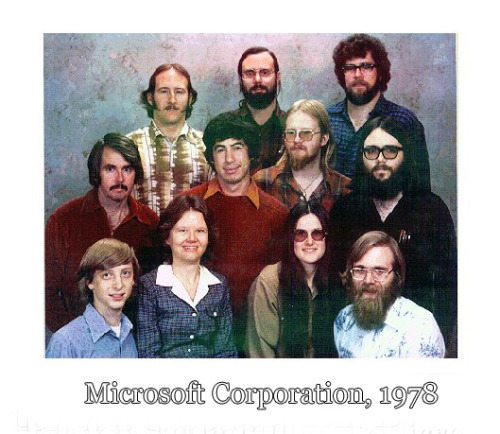
OMG, is that Bill Gates in the lower left? Via Skull Swap.

Tuesday, September 1, 2009

I Think We're Into the Fighting Stage Now

So about Don't Ask, Don't Tell? Can we end it already?
Via Skull Swap. To all my Gay, Lesbian, Bi, and Transgender friends, I'll do what I can to help us move to that final stage. We're not human until we're ALL human.

Tuesday, August 25, 2009

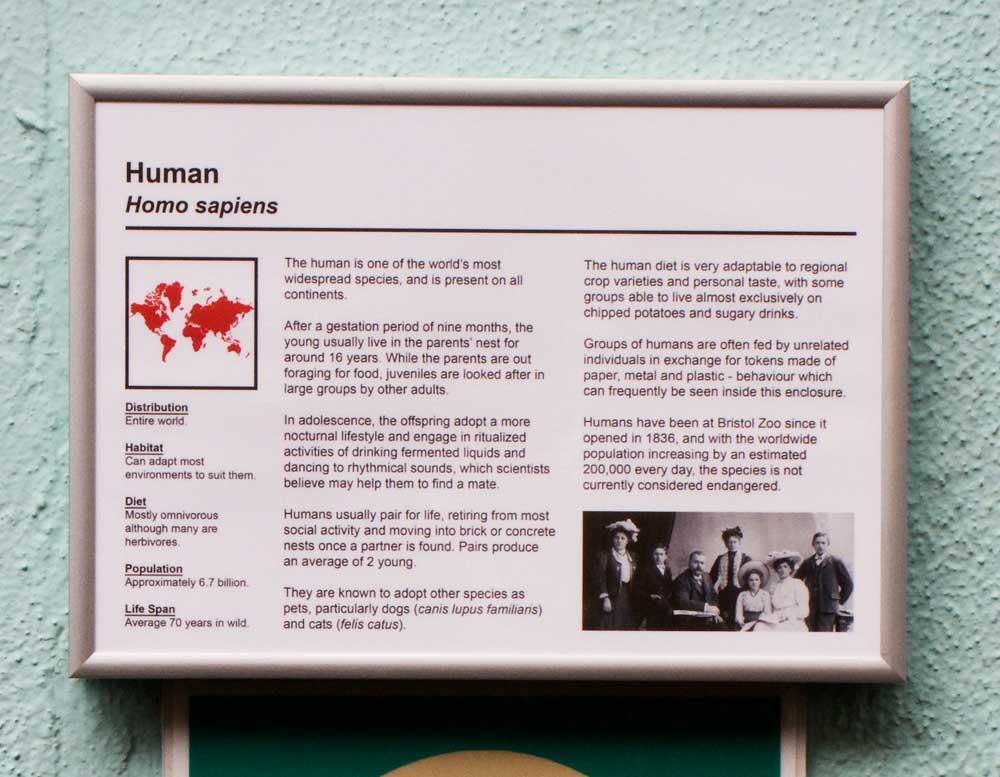
As Seen On TV

And at the Bristol Zoo:(Click for glorious full size) Via BuzzFeed

Wednesday, August 19, 2009

I Have Squirrelly Friends

Crasher squirrel has been making the rounds, and has become a powerful meme... I've been visiting various people's facebook albums, swiping photos and squirrelizing them. Following are some of my squirrelly friends and acquaintances.Theresa, a regular here at the coffee shop.
Robin (left), another IZ person, out and about in the western Cascades.
Sam, a barrista here, up on Marys Peak on July 4, with my little burg nearly invisible in the background.
JD (lower right), who now works in tech support near Salem, so I don't see him too often anymore.
Callan Bently, Assistant Professor of geology at Northern Virginia Community College; his blog is here.
Katie, another IZP, shortly after her recent bike crash, is startled by squirrel.
And Ben, who finished an MS in math at the end of spring term, and is now residing in sunny Arizona. Expect some more squirrel appearances.

Friday, July 31, 2009

Coffee, Coffee, Coffee...

...coffee, coffee, coffee... I like coffee, do you like coffee, let's get some coffee, what shall we do with the coffee, let's get some more coffee...
The Mocha Lisa, in Sydney, Australia. The above is from SFGate, and I found another at DemocraticUnderground:
Rob Griffith /AP

I tried to find a story on the inspiration and creation of this wonderful, tongue-in-cheek artwork with no luck, but I did come across a link to a delightfully named coffee shop in Racine Wisconsin, also called the Mocha Lisa. To my fellow caffeine freaks in the northern midwest, greetings from Outside the Interzone. Ilikecoffee,doyoulikecoffee,let'sgetsomecoffee...

Monday, July 27, 2009

Almost Twins

I hadn't realized that Maya Lin was born only one day after me, on October 5, 1959. I have a number of connections to her. According to Wikipedia,
In 2000, Lin re-emerged in the public life with a book Boundaries.[15] Also in 2000, she agreed to act as the artist and architect for the Confluence Project, a series of outdoor installations at historical points along the Columbia River and Snake River in the state of Washington. This is the largest and longest project that she has undertaken so far.
Though the article doesn't say so, a number of those installations are also in Oregon, and from time to time I read articles about her project in Oregon papers. Here are some articles about Confluence: One Two Three Four, and a map of the individual installations.

She and I also graduated from high school in the same class, Athens HS, 1977.